UK Casino Winnings Tax: What NineCasino Readers Need to Know
 Available in GB
For an ordinary UK player, gambling winnings are generally not subject to UK Income Tax. That answer is about the player’s winnings, not about whether a casino is licensed for Great Britain and not about the taxes a gambling operator may owe. HM Revenue & Customs treats ordinary betting and gambling differently from a taxable trade, and its guidance excludes gambling winnings from wagers and bets from the miscellaneous income charge.
That distinction is especially important when reading about NineCasino. A tax rule that generally leaves ordinary player winnings untaxed does not authorise an operator, prove that a casino may serve Great Britain, or create regulatory protection. Tax, operator duty and licensing are separate questions, and NineCasino’s Great Britain licensing position is covered on the dedicated licence page.
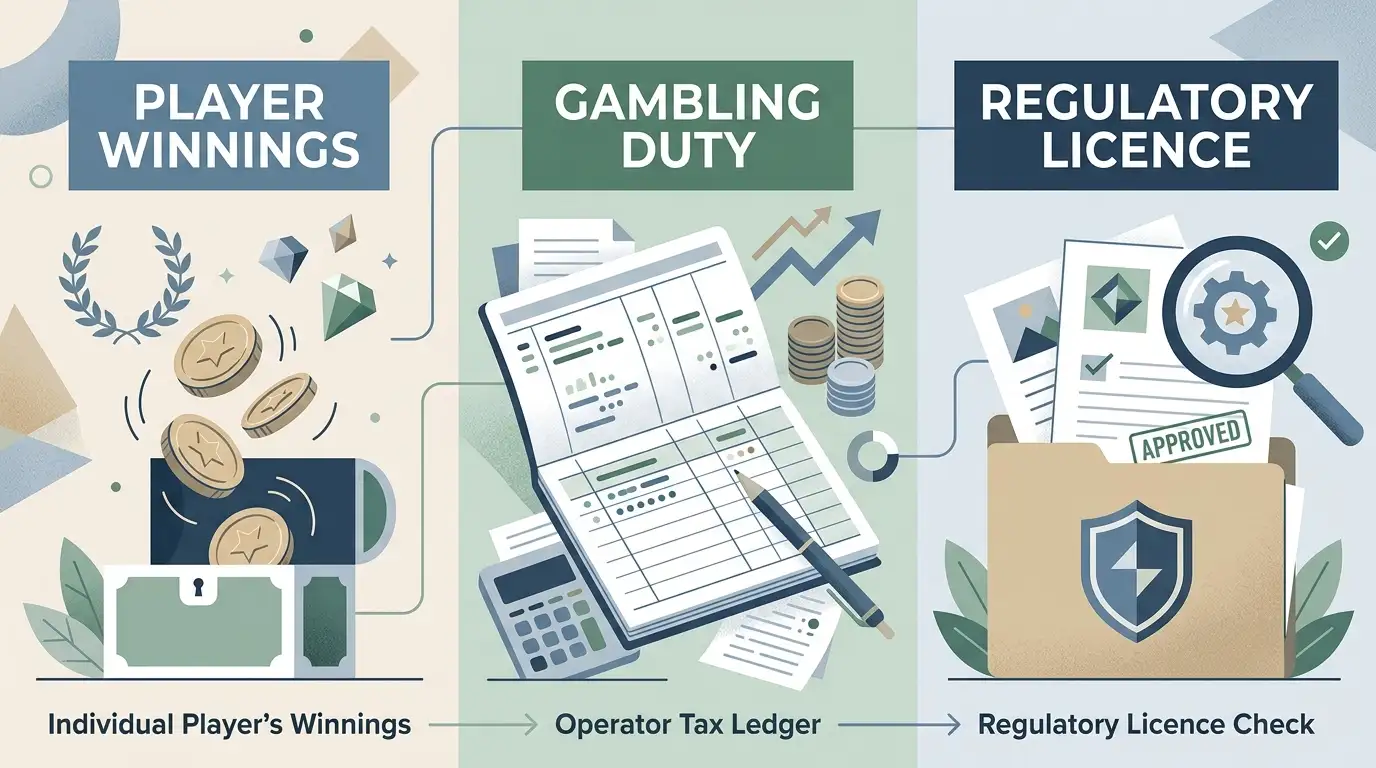
Table of Contents
- Do UK players pay tax on casino winnings?
- Player winnings tax and operator tax are different
- Why tax-free winnings do not mean a casino is UK licensed
- What the 40% Remote Gaming Duty rate actually tells you
- What this means if you win at an online casino
- Three checks to keep separate
- How to read NineCasino information in the right order
- Sources used for the tax answer
- FAQ
- Tax status does not answer the licensing question
Do UK players pay tax on casino winnings?
The concise answer is generally no for ordinary gambling winnings. HMRC’s Business Income Manual says betting and gambling, as such, do not constitute trading. Its separate miscellaneous-income guidance also lists gambling winnings from wagers and bets among amounts that the sweep-up income provisions do not tax. For a typical person playing casino games as a customer, that is the relevant starting point.
The word “generally” matters because this is not a personalised tax ruling. HMRC’s own material distinguishes an ordinary punter from situations where gambling activity is tied to a wider trade or commercial activity. The practical point for a normal casino customer is much simpler: a casino win is not treated in the same way as salary, freelance income or ordinary business profit merely because money has been received.
The same tax treatment does not depend on whether the win came from NineCasino or another brand. The tax question concerns the nature of the receipt and the taxpayer’s circumstances. The separate question of whether a particular operator is authorised to offer remote gambling in Great Britain belongs to licensing, not personal income taxation.
Player winnings tax and operator tax are different
A common source of confusion is the phrase “gambling tax”. It can refer to taxes imposed on gambling businesses rather than tax charged to an ordinary customer on a win. In the UK system, Remote Gaming Duty is an operator-side gambling duty. HMRC states that the Remote Gaming Duty rate is 40% from 1 April 2026.
That 40% figure should not be read as a deduction from a player’s jackpot or withdrawal. It is an operator tax measure. The fact that the government taxes remote gaming businesses does not turn a customer’s ordinary gambling winnings into taxable employment or business income, and the fact that ordinary player winnings are generally tax-free does not remove operator tax obligations.
| Question | Who it concerns | Current position |
|---|---|---|
| Are ordinary gambling winnings generally subject to UK Income Tax? | The individual player | Generally no, based on current HMRC guidance. |
| What is the Remote Gaming Duty rate? | Remote gaming providers within the duty rules | 40% from 1 April 2026. |
| Does tax treatment prove a casino has a Great Britain licence? | Operator authorisation | No. Licensing must be checked separately. |
Why tax-free winnings do not mean a casino is UK licensed
The player-tax rule is general. It is not a badge attached to a casino brand. A reader could therefore make a serious category error by reasoning that “UK winnings are tax-free, so this casino must be legal or licensed in the UK.” The first statement concerns the treatment of ordinary gambling receipts. The second would require evidence about the operator and the relevant regulator.
For NineCasino, the dedicated NineCasino licence keeps Great Britain authorisation separate from the operator’s other licensing information.
Tax guidance also does not establish account eligibility, cashier access, bonus eligibility or current acceptance of a player in a particular country. Those are operational or contractual questions. A tax rule can apply to a person’s winnings without saying anything about whether a particular website should accept that person’s registration or deposit.
What the 40% Remote Gaming Duty rate actually tells you
HMRC’s current guidance records Remote Gaming Duty at 40% from 1 April 2026. For readers, the useful lesson is not to confuse that operator-side rate with a personal tax rate on winnings. The 40% number belongs in a discussion of gambling-business duties, not in a calculation of what an ordinary customer keeps after a casino win.
This separation also helps when comparing older articles. Pages written before April 2026 can show the previous Remote Gaming Duty rate, so the date of the source matters. The current rate used here reflects current HMRC guidance rather than an older casino review.
Operator duty is also not a substitute for a licensing check. A tax regime can describe how remote gaming profits are taxed while a regulator separately determines which businesses hold the appropriate permissions for a market. The two systems may interact at policy level, but they answer different reader questions.
What this means if you win at an online casino
For a normal player asking only, “Will HMRC treat my casino win as ordinary taxable income?”, the general answer is that ordinary gambling winnings are generally tax-free in the UK. You do not need to turn that straightforward point into a calculation using the operator’s Remote Gaming Duty rate.
It is still sensible to keep clear records of large financial movements for your own banking and accounting purposes. That is practical record-keeping guidance rather than a claim that a particular win is taxable. Banks, payment providers and other institutions can have their own compliance questions about transactions, and those questions are different from the tax treatment described here.
Unusual commercial arrangements, business structures, cross-border residence questions and gambling activity intertwined with another trade are outside this general scope because they can depend on facts beyond the ordinary player’s situation. If your circumstances are unusual or commercially structured, use current HMRC material or qualified tax advice rather than extending this general answer by analogy.
Three checks to keep separate
- Player tax. Ask whether the winnings themselves are taxable to you. For ordinary gambling winnings, HMRC guidance supports the general tax-free answer.
- Operator duty. Ask whether the gambling business is within UK gambling-duty rules. Remote Gaming Duty is an operator-side tax and is 40% from 1 April 2026.
- Operator authorisation. Ask whether the casino holds the appropriate Great Britain licence. Check NineCasino’s current position on the dedicated licence page.
Keeping those checks separate prevents one fact from being misused as evidence for another. A tax-free player receipt does not establish regulatory approval. An operator tax rate does not tell you what a player owes personally. A foreign or other-jurisdiction licence does not become a UKGC licence because UK tax guidance exists.
How to read NineCasino information in the right order
If your question starts with taxation, answer the tax point first: ordinary gambling winnings are generally tax-free for UK players. Then, before treating that answer as a green light to use any particular site, move to the regulatory evidence. For NineCasino, the UK licence status page records the specific UKGC register outcome and explains the distinction between Great Britain licensing and the operator’s other licence information.
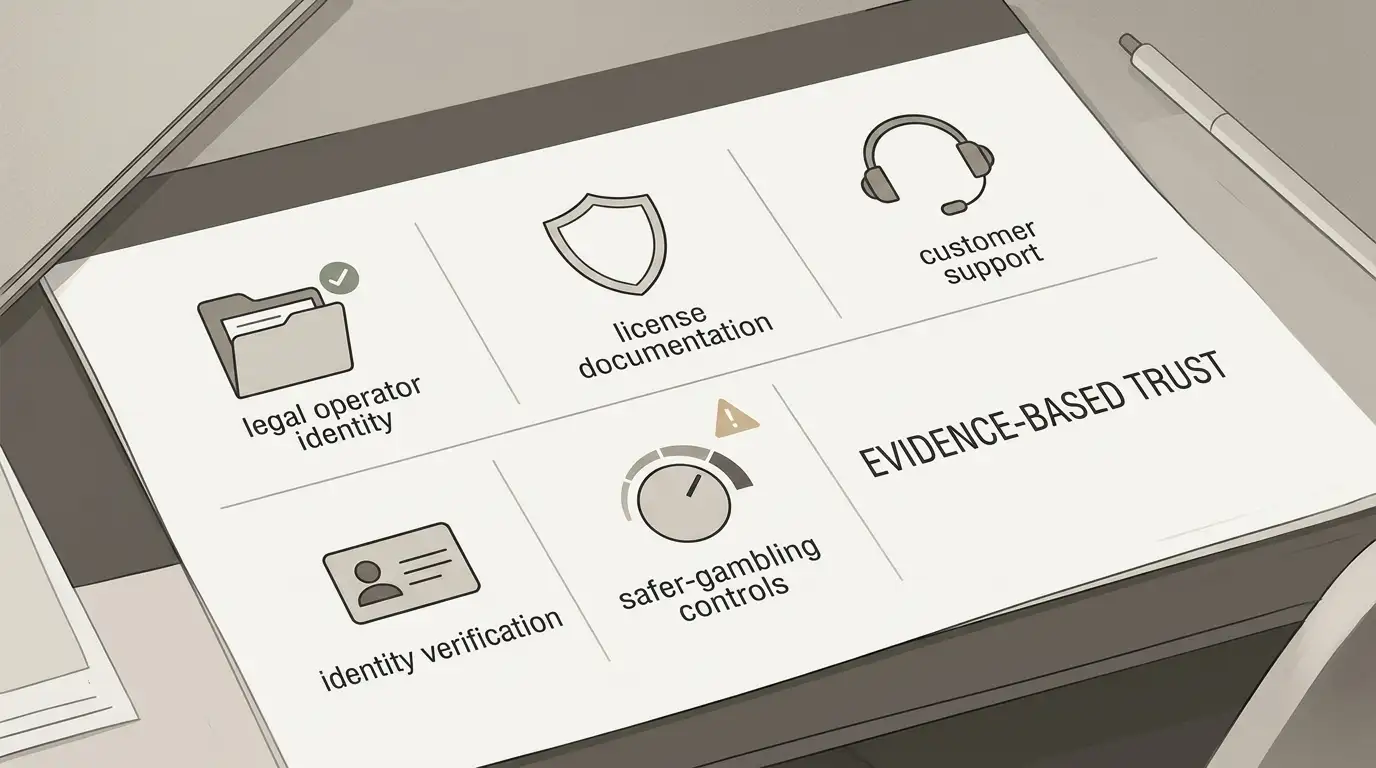
After licensing, evaluate operational trust separately. The trustworthiness review covers operator identity, support, verification and safer-gambling tools without converting those features into a claim of UK authorisation. This sequence is more informative than a single “safe” or “unsafe” label because it preserves the scope of each fact.
For the broader product context, the full NineCasino review connects the licence and tax discussion to the rest of the site’s product and regulatory information. Tax status and regulatory status remain separate questions.
Sources used for the tax answer
The player-tax conclusion is grounded in current HMRC material. The HMRC Business Income Manual explains that betting and gambling as such do not constitute trading and that a mere punter is not normally taxed on gambling profits. HMRC’s miscellaneous-income guidance separately lists gambling winnings from wagers and bets among receipts not taxed under those sweep-up provisions.
The operator-tax figure is grounded in HMRC’s current Remote Gaming Duty guidance, which records the 40% rate from 1 April 2026. Readers checking this subject later should use the latest official version because duty rates can change over time.
- HMRC Business Income Manual: betting and gambling
- HMRC Business Income Manual: miscellaneous income overview
- HMRC gambling duties guidance
FAQ
Are casino winnings taxable in the UK?
For ordinary players, gambling winnings are generally not subject to UK Income Tax. This is a general statement based on HMRC guidance, not personalised tax advice for unusual commercial or cross-border circumstances.
Do I pay 40% tax on a casino win?
No. The 40% figure discussed here is the Remote Gaming Duty rate from 1 April 2026 and concerns gambling operators within that duty regime. It is not a 40% personal tax on an ordinary player’s casino winnings.
Does tax-free treatment mean NineCasino is UKGC licensed?
No. Personal tax treatment and casino licensing are separate. Check the dedicated licence page for NineCasino’s current Great Britain licensing position.
Can I use the tax rule to decide whether a casino is available in Britain?
No. Tax treatment does not prove account eligibility, market access or regulatory authorisation. Those questions need their own current information.
Where should I check NineCasino’s regulatory position?
Use the dedicated NineCasino licence page for the UKGC register outcome and the distinction between Great Britain licensing and other regulatory information.
Tax status does not answer the licensing question
For an ordinary UK player, gambling winnings are generally tax-free. Remote Gaming Duty is a different issue: it is an operator-side duty, currently 40% from 1 April 2026. Neither fact proves that a particular casino is authorised for Great Britain.
For NineCasino specifically, treat the tax answer as a tax answer, then use the licence and trust pages separately when assessing the brand’s position for Great Britain.
Prepared by the Nine Casino 2 editorial staff.