
Best Progressive Jackpot Slots: How Pools Work
 Available in GB
Progressive slots can share a game-specific pool across operators, while contribution rules, release mechanics and minimum bets shape how the jackpot works.

Table of Contents
- How Jackpot Pools Travel Between Casinos
- Finding Progressive Slots in Online Catalogues
- The Different Ways a Game Can Release Its Jackpot
- What the Machine Adds to the Pool
- The UK Rules Behind Online Jackpot Play
- Free Spins, Bonus Terms and the Jackpot Catch
- What a Casino Site Can and Cannot Promise About a Payout
- The Base-Game Return Behind the Headline Jackpot
- A Small Share of Each Spin, Accumulated
- When a Minimum Bet Changes Jackpot Eligibility
How Jackpot Pools Travel Between Casinos
A progressive jackpot can appear inside a casino account without belonging to that casino alone. Where the same progressive slot is carried by several operators, its network jackpot pool is shared across those operators. The casino is the place where the game is encountered; the pool belongs to a wider arrangement connecting copies of that game.
That distinction is easy to miss. An online casino presents a complete-looking room: games sit under its name, balances appear in its account interface, and play takes place on its site. The visual unity suggests that everything on screen is local property. A network jackpot unsettles that impression. Its reach is not defined simply by the walls of the website where a player happens to open the slot.
The useful boundary is the game itself. If several operators carry the same progressive slot, they are connected to the same jackpot pool for that game. The pool is not a general prize shared by every slot in a casino, nor does the presence of a progressive title mean that all games on a site feed one common total. The connection concerns that particular game across the operators carrying it.
Progressive jackpot slots can make payout details worth checking alongside the games themselves. This guide gives you a concise reference point when considering where to play.
Payout speed: 1-3 business days WinBeast lists a payout speed of 1–3 business days, a useful detail to consider when looking at progressive jackpot slots.
Payout speed: 1-3 business days SpinFormula lists payouts as taking 1–3 business days. That timing is its available point of note for this guide.
Payout speed: 1-3 business days EvoSpin has a stated payout speed of 1–3 business days, giving readers a concrete detail to weigh when exploring jackpot slots.
Payout speed: 1-3 business days Britsino lists a payout speed of 1–3 business days. This is the available practical detail to consider for jackpot-slot play.
Payout speed: 1-3 business days Amunbet’s stated payout speed is 1–3 business days, offering a clear point of reference for readers considering progressive jackpots.
Payout speed: 1-3 business days BeOnBet lists payouts as taking 1–3 business days. Its listed payout timing is the key detail available here.
Payout speed: 1-3 business days Chanze gives a payout speed of 1–3 business days, a useful consideration when choosing a place to try jackpot slots.
Payout speed: 1-3 business days Dieselwin lists a payout speed of 1–3 business days. That stated timing is the available point of note for this reference.
Payout speed: 1-3 business days NightLuck’s listed payout speed is 1–3 business days, giving readers one practical detail to consider.
Payout speed: 1-3 business days NightWin states a payout speed of 1–3 business days. This provides a concrete reference point for readers exploring progressive jackpot slots.
This makes the operator’s role more like a window than a private vault. The casino supplies the setting in which the game is offered, while the jackpot can extend beyond that setting to other operators with the same title. A figure displayed in one casino may therefore represent a prize whose network is larger than that casino’s own audience. The site is visible; the network is less so.
The arrangement reflects a broader feature of online gambling: a game can travel between businesses without its central identity being remade at every stop. Different operators may present the same progressive slot to their customers, yet the shared pool is not reset into a separate, site-specific jackpot each time the game appears. The participating casinos are connected through the game’s network rather than united under one consumer-facing brand.
That is why “progressive jackpot casino” can be a misleading idea if it suggests that the casino itself is the essential unit. A site may offer progressive jackpot slots, but the relevant question for understanding the pool is whether other operators carry the same progressive game. One casino’s catalogue is only one point of access to that game; it does not, by itself, define the pool’s boundaries.
The distinction also helps make sense of apparently different casino environments. Two sites can look unrelated, use different names and organise their game pages in different ways, while offering the same progressive slot connected to the same network jackpot. Conversely, two games appearing next to each other in a single casino are not thereby part of one shared pool. The shared connection follows the game, not the layout of the website.
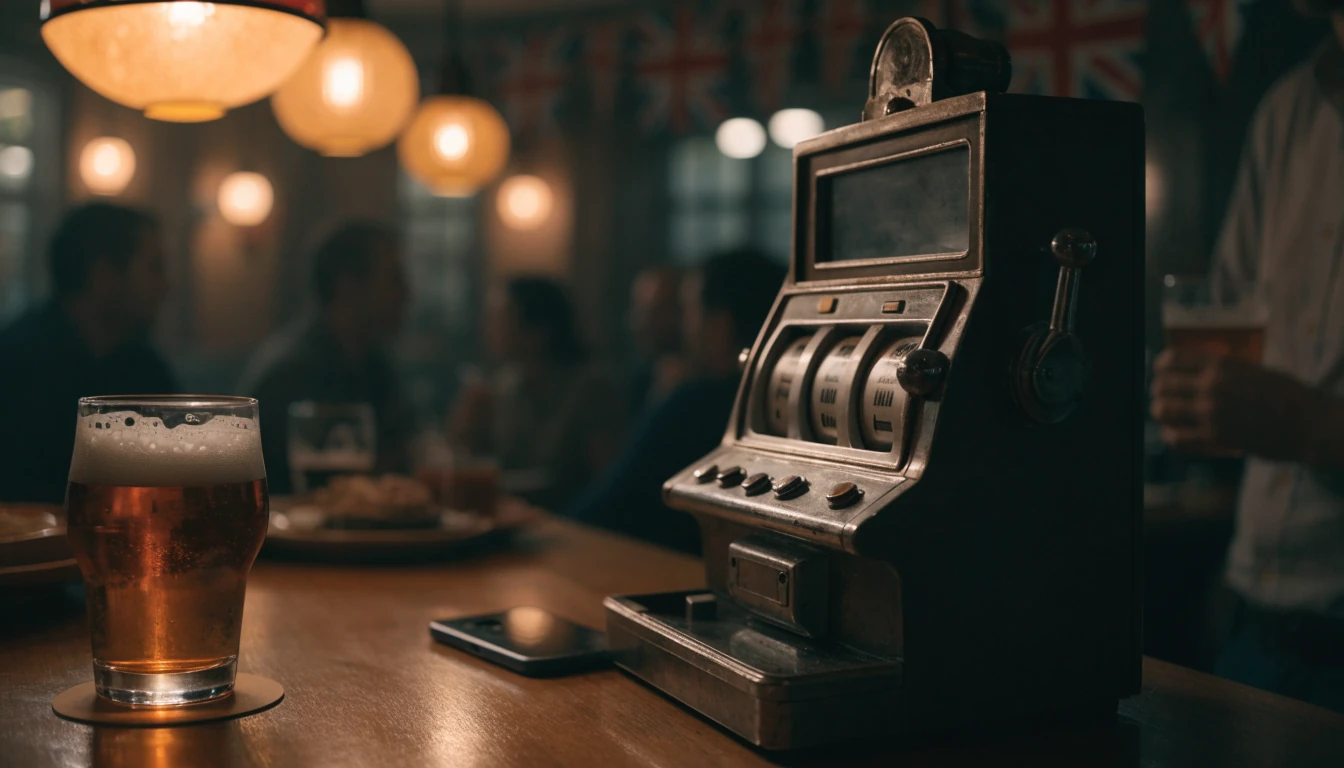
There is a small but telling reversal here. Casinos compete to attract attention, but a network jackpot depends on a form of connection that crosses those competing storefronts. Each operator remains a separate place to play; the prize pool is shared among operators carrying the same game. The consumer-facing world is divided into brands. The jackpot’s reach is not.
This does not mean that every progressive jackpot is available everywhere, or that every casino displaying a slot belongs to its network. The point is narrower: where the same progressive slot is carried by multiple operators, its network jackpot pool is shared across them. The shared pool is attached to that common game, not to the category of progressive slots as a whole.
For anyone looking at a progressive jackpot online, the number on the screen can consequently suggest a wider community than the casino’s own customers. It is a network figure presented within a local interface. The operator may be the visible host, but it is not necessarily the sole boundary of the prize.
A shared pool, then, is neither a casino-wide pot nor a universal jackpot that follows every progressive game. It travels through the network of operators carrying the same title. The casino is the doorway. The game connects the rooms.
Finding Progressive Slots in Online Catalogues
A catalogue is not a fixed shelf. The progressive jackpot slots shown at one casino may not match the selection at another, and the range can change when providers update their catalogues. A specialist review describes this variation, but a list of games is only a view of what was available when it was checked—not a permanent inventory.
A game’s presence in a casino catalogue is local and temporary; a title missing from one library may still be available from other operators in the market.
That matters when comparing online progressive jackpot slots. A title missing from one library has not necessarily disappeared from the market; it may simply not be included in that operator’s current selection. Equally, a game visible in an old comparison may no longer appear in a catalogue today. The practical task is therefore less like consulting a definitive directory and more like checking a changing display.
Casino libraries can be broad enough to make browsing feel like an activity in its own right. A progressive game may sit among hundreds of other slots, without a prominent label or dedicated category. Where a catalogue offers search or filters, those can narrow the field; where it does not, scrolling and checking individual game descriptions may be the only route. The arrangement belongs to each site, not to the games as a universal system.
Search terms inside a casino can also be less reliable than they look. A category labelled “jackpot” may include games whose prizes do not grow progressively, while a progressive title may be grouped under a provider or a general slot heading. A label is a useful signpost, not proof of how a particular game works. The game’s own information is the better place to confirm its features.
This distinction is useful for anyone looking for online slots with a progressive jackpot rather than simply a game carrying the word “jackpot” in its name or category. A catalogue can help locate candidates, but it cannot by itself settle whether a prize is progressive, how the game operates, or what conditions apply. Those details belong to the individual game description and its rules.

The phrase “best progressive jackpot slots online” suggests a neat ranking waiting to be found. In practice, the word “best” can conceal several different preferences: the size or visibility of a prize, the style of play, or simply whether a game is available at a chosen casino. A catalogue answers the last question only for its own current selection. It cannot establish a universal order of merit.
Free online progressive jackpot slots are another matter of presentation. A game may be available in a free-play mode in one setting and not another, but a listing alone should not be taken as confirmation that every title can be tried without a wager. Availability and play mode are separate details, and the catalogue may not make that separation obvious. The game page is where the distinction needs to be checked.
The same caution applies to lists labelled as the best online progressive jackpot slots in the UK. Such a list can age quickly if it depends on what appears in particular casino libraries. Its value lies in being a starting point, not a guarantee that every named title remains available everywhere. A current catalogue is more useful for confirming presence; a game description is more useful for confirming what is actually being offered.
Catalogues are commercial displays as well as indexes. They reflect the selection an operator has at a given moment, shaped by provider updates and the operator’s own library. A missing title may say something about that selection, but it does not, by itself, say anything about the quality of the game or the wider market. Availability is local. And temporary.
- Check individual game descriptions to confirm features
- Use catalogues to locate potential candidates
- Verify the current availability in the live library
- Rely on the “jackpot” category label as proof of a progressive prize
- Assume a ranking of “best” slots is a universal order of merit
- Take a listing alone as confirmation of free-play availability
The Different Ways a Game Can Release Its Jackpot
A progressive jackpot slot has two separate questions built into it: how the prize grows, and what event awards it. The first concerns the pool; the second belongs to the game’s own rules. Two slots can both offer a growing prize and still make it available in quite different ways.
Some progressive jackpots are triggered at random. In that design, the jackpot does not depend on landing a particular visible combination or reaching a named bonus round. A qualifying game event can award it without the reels displaying a special pattern. “Random” describes the trigger, not a promise that a prize will appear at any predictable point. The result is uncertainty by design: a spin can look much like any other, while the jackpot condition is handled behind the scenes.
Other games attach the jackpot to a specific combination, or make entry into a bonus round part of the route to the prize. Here the game gives a more visible signpost. A combination may be required, or a bonus feature may provide the opportunity to pursue the jackpot. That does not mean every bonus round awards the prize; it means the jackpot’s release is connected to that defined part of play.
The distinction matters because the headline amount says nothing about the route to it. A large progressive prize might be randomly awarded, or it might be tied to a particular combination or bonus feature. Size alone cannot tell a player what must happen in the game. Nor does the word “progressive” identify a single trigger system. It describes the growing prize, not the conditions under which the game releases it.

This is where descriptions such as “top progressive jackpot slot games” can flatten meaningful differences. A list organised around the biggest progressive jackpot slots may draw attention to the prize figure, but it cannot explain the game’s release rule unless that information is set out separately. A conspicuous number is easier to advertise than an account of how a feature works. The mechanics are less theatrical, but more useful.
For a random-trigger game, the essential point is that no specific combination is required in the way a pattern-based trigger would require one. For a combination-based game, the specified symbols or result matter. If entry into a bonus round is involved, the bonus is part of the route rather than a decorative interruption. These are different arrangements, not different names for the same event.
The wording in a game’s rules therefore deserves more attention than the label on its jackpot. A description may say that the prize is awarded randomly, or it may connect the award to a stated combination or bonus round. Those terms tell a clearer story than the jackpot’s size. They also help distinguish the possibility of winning the main game’s ordinary prizes from the special condition that releases its progressive prize.
The appeal of a random trigger is its apparent suddenness: no visible sequence has to announce that the jackpot is near. The appeal of a defined trigger is its legibility: the game identifies a condition or feature associated with the prize. Neither arrangement makes the outcome predictable. One conceals the trigger within the game’s operation; the other gives it a stated form. Neither turns a jackpot into a scheduled event.
The jackpot is awarded via a qualifying game event without requiring a specific visible combination or bonus round.
The prize is attached to a specific combination of symbols appearing on the reels.
Entry into a dedicated bonus feature provides the opportunity to pursue the progressive jackpot.
That is why the largest progressive slot jackpot and the easiest-to-understand jackpot are not necessarily the same thing. The prize’s scale and its release mechanism answer different questions. A game’s rules explain the second; a large figure answers only the first. The distinction is small in wording, and substantial in play.
What the Machine Adds to the Pool
A progressive jackpot is funded through play, not simply displayed beside a slot as a prize waiting for someone to claim it. When a wager is placed on a connected machine, a small portion can be assigned to the jackpot pool. Across many wagers, those contributions gather into the growing prize.
For progressive jackpot slots, that contribution is typically between 1% and 3% of each wager. The rest of the stake does not go into the jackpot. It remains part of the game’s wider payout structure, while the designated share is counted towards the progressive prize. The split is easy to overlook during a spin, but it is the essential financial distinction between a progressive jackpot and a fixed top prize.
The machine is therefore more than a screen for reels and symbols. It is also the point at which a wager participates in the pool’s funding. A player may see only one spin; the jackpot reflects contributions from wagers made on connected slot machines. Each contribution is small beside the headline amount. The accumulation is the point.

This helps explain why the displayed prize can rise without any single player making a large contribution. The pool is built incrementally as connected machines are played. The machine does not need to produce a jackpot-winning result for a wager to add to the pool: funding and winning are separate parts of the arrangement. One concerns how the prize grows; the other concerns the game’s rules for awarding it.
That distinction matters when comparing a progressive slot with a game offering a fixed prize. A fixed top prize is set by the game’s payout design. A progressive prize changes as contributions accumulate. The number on screen is not simply a promise that the machine itself has set aside that entire amount from one player’s stake. It represents a pool built through connected play.
The contribution rate is not a bonus on top of the wager. It comes from the wager itself. That is why the same spin can serve two purposes at once: it plays the slot and, in a limited way, adds to the jackpot. The amount directed to the pool may be too small to register as a separate event in the player’s experience, yet repeated contributions are what make a progressive total possible.
There is a quiet piece of accounting beneath the spectacle. Reels turn, symbols land, and the pool receives its share. The visible drama belongs to the game; the steady arithmetic belongs to the machine’s funding arrangement. A jackpot can look like a sudden fortune, but its growth is incremental.
For progressive slot machines, then, the relevant unit is not only the individual spin but the stream of wagers placed across connected machines. Each eligible wager contributes a fraction, and those fractions accumulate. The pool grows by addition, not by theatrical flourish. That is the mechanism behind the rising figure.
Progressive jackpots are typically funded by a contribution of between 1% and 3% of each wager placed on connected machines.
The UK Rules Behind Online Jackpot Play
A progressive jackpot does not sit outside gambling regulation because its prize grows across many spins or appears in an online game. When it is offered as part of remote casino gambling to consumers in Great Britain, the relevant authority is the UK Gambling Commission. The Commission’s remit follows the gambling activity and the market being served, not the location of the equipment that runs the game. A server elsewhere does not, by itself, place a service beyond that remit.
That distinction matters in a business built to cross borders almost casually. A player may see one screen; behind it may be software, servers and commercial arrangements in several places. For remote gambling aimed at people in Great Britain, the location of the key equipment does not change which regulator has responsibility. The Commission is the sole regulator of commercial gambling in Great Britain, including online casino activity.
The licensing system has two levels. Businesses need an operating licence to offer gambling, while individuals involved in operating it may need personal licences. These are not interchangeable credentials: one concerns the organisation providing the activity, the other the people carrying specified responsibilities within it. The arrangement makes the regulated operator, rather than a game’s global reach, the central point of accountability.
Progressive jackpot slots are therefore covered through the ordinary framework for online gambling. The jackpot’s size, the game’s provider and whether it is played on a phone do not create a separate licensing authority. A search for the best progressive jackpot slots in the UK may begin with a game title, but the public-interest question begins elsewhere: whether the gambling service is being offered under the appropriate UK framework.

There is a geographical qualification to the familiar shorthand “UK rules”. The Gambling Act 2005 governs gambling in England, Wales and Scotland, but not Northern Ireland. The Commission’s role described here concerns Great Britain; it should not be stretched into a claim about a single regulatory arrangement covering every part of the United Kingdom. Maps and legal boundaries rarely make satisfying companions, but this one matters.
For a player, licensing is not a decorative badge attached to a casino’s branding. It identifies that the business offering remote gambling to Great Britain is within the Commission’s system. The regulator’s remit is market-wide: it is not a verdict on which progressive jackpot slot is best, nor an endorsement of a particular catalogue. Those are separate questions. Its role is to regulate commercial gambling and license the businesses and individuals operating within that system.
The practical point is modest, and important. A jackpot can be international in appearance while the act of offering it remains subject to the rules of the place where the customer is served. In Great Britain, that means the UK Gambling Commission’s licensing framework applies to remote gambling regardless of where the machinery sits. A borderless screen; a definite jurisdiction.
Free Spins, Bonus Terms and the Jackpot Catch
Free spins can make a slot feel like a low-cost way to explore it, but a spin granted by a promotion is not necessarily eligible for the same prizes as a cash-funded one. In particular, being able to try a progressive slot does not mean that any jackpot it displays is included in the offer. The promotion’s terms decide which games qualify and what happens to any winnings.
Most free-spin offers exclude progressive slots or impose winnings caps, often between £50 and £100, on such games.
A specialist review reports that most free-spin offers exclude progressive slots. It also describes caps of £50–£100 on winnings from free spins played on progressive games. These are reported offer terms, not a rule applying across UK casinos; promotions can differ, and the terms attached to a particular offer are the relevant ones. A free spin may therefore be available while the headline jackpot remains out of reach.
That distinction matters for anyone looking to play progressive jackpot slots for free. A demo mode, where offered, is for trying a game without real-money stakes; it does not turn demo winnings into withdrawable funds. Promotional spins are different: they may produce winnings, but only under the offer’s conditions. The word “free” describes how the spin was granted, not what can eventually be kept.
No-deposit bonuses have their own arithmetic. A specialist review reports wagering requirements of 40x–60x and maximum withdrawal caps of £50–£100 for winnings from such offers. Those figures describe terms reported in a review, not a guaranteed package or a market-wide standard. The wagering requirement determines how much qualifying play is needed before withdrawal; the cap can limit what is payable even if the balance is higher. Both conditions can matter at once.
The practical distinction is between trying a game and playing it for a jackpot with real money. Free progressive jackpot slots may refer to demo play, promotional spins, or a bonus that permits selected games; those are not interchangeable. If a bonus excludes progressive slots, playing one with the promotional balance may not count as eligible play. If it permits them, a separate winnings cap may still apply.

Promotional wording tends to put the attractive part in large type and the qualifying conditions elsewhere. The useful details are the eligible games, whether jackpot winnings count, any cap on those winnings, and the wagering requirement attached to the bonus. For a real-money progressive jackpot, the promotional terms cannot be assumed to carry over simply because the same game appears in the offer. Free play has boundaries.
What a Casino Site Can and Cannot Promise About a Payout
A jackpot figure on a game screen is a prize headline, not a timetable. The amount may attract attention; the terms explain what happens after a win is recorded. Those are different kinds of information, and the gap between them matters most when the sum is large.
A specialist review reports that a substantial progressive jackpot withdrawal may involve further verification and, in some cases, structured payments spread over several years. That is a possibility described by a secondary source, not a standard promise applying to every UK site or every game. The operator’s own terms are the place to establish whether a particular payout can be staged, what process applies and what conditions may affect it.
Verification is also distinct from a refusal to pay. A site may need to confirm account details or examine a win before releasing funds; the precise checks and documents depend on its stated procedure. A general assurance that withdrawals are “fast” says little about a large progressive prize. The useful detail is whether the terms explain what happens when a win requires additional review, and how the operator communicates any delay.
Large Payout Procedures
A substantial progressive jackpot withdrawal may involve additional verification and, in some instances, structured payments spread over several years, depending on the operator’s terms.
The payment clause deserves close reading. It may distinguish ordinary withdrawals from exceptional wins, describe whether the full amount is paid at once, or set out an instalment arrangement. If the wording is silent or unclear, the public jackpot display cannot fill that gap. Nor does the word “progressive” tell anything about how a winning amount reaches a player’s account.
This is a practical distinction for anyone comparing UK sites with progressive jackpot slots: the game catalogue and the payout terms answer separate questions. A site may offer a video slot with a progressive prize, yet its terms determine the handling of a successful claim. A demo version can show how a game looks and plays, but it cannot demonstrate the operator’s real-money verification or withdrawal process.
The terms should also make clear which entity handles the claim and where a complaint about the payout process goes. UKGC-licensed operators must provide an internal complaints process and access to an approved Alternative Dispute Resolution service. That offers a route for a dispute; it does not turn an unclear payment clause into a clear one.
The concrete point to inspect is therefore not a site’s promise of a life-changing win, but the section dealing with exceptional or large withdrawals. It should say whether additional checks or staged payments may apply, and explain the procedure in terms that can be understood before play begins. If it does not, certainty is not supplied by the size of the jackpot. Only the headline is.
The Base-Game Return Behind the Headline Jackpot
A progressive slot has two different attractions on its books: the ordinary game and the prize that can grow beyond it. The base-game return describes the first, not the spectacle of the second. In progressive slots, that return often sits in the 88%–92% range, with the difference in payout directed towards the jackpot pool.
That distinction matters when comparing progressive jackpot slot RTP figures. A lower base-game percentage does not, by itself, describe every possible payout attached to the game. It describes the return attributed to ordinary play, while the jackpot is a separate, uncertain prize. The headline figure can therefore draw the eye away from a quieter calculation.
RTP is a theoretical measure across play, not a promise that a particular session will return a set share of its stakes. Nor does a large jackpot make the ordinary spins more generous. It changes the shape of the possible outcome: a smaller share is returned through the base game, while the progressive prize offers a chance of a much larger result. The chance and the ordinary return are different parts of the picture.
This is why a list of top-rated progressive jackpot slots cannot be assessed by the jackpot display alone. A striking pool says little about the base-game return, and an RTP figure says little about how often a jackpot is won. Those are separate questions, even when a game’s presentation folds them together in bright lettering.
The arithmetic also complicates comparisons with non-progressive slots. A progressive game may appear less generous in routine play because some payout is assigned to the jackpot rather than the base game. That is not a hidden bonus layered over an otherwise identical slot; it is a different division of the game’s payout. The trade-off is plain, if not always prominent.
Base-Game RTP
In progressive slots, the base-game return (often 88%–92%) is separate from the uncertain progressive jackpot pool.
For anyone considering whether to play progressive jackpot slots, the useful distinction is between the return on ordinary play and the possibility of a jackpot. Neither figure can stand in for the other. A high advertised prize does not repair a lower base-game RTP, and a lower base-game RTP does not tell the whole story of the game’s potential outcome.
The machine keeps two accounts. One is easier to understand; the other is easier to advertise.
A Small Share of Each Spin, Accumulated
A progressive jackpot is built by setting aside a small part of wagers as play takes place. In progressive jackpot slots, that contribution is commonly between 1% and 3% of each stake. The amount may look slight beside the wager itself, but repeated contributions are what give the prize its defining quality: it can grow over time rather than remain fixed.
The arithmetic is collective in effect, even when a player sees only an individual game. A portion of each qualifying wager is directed to the jackpot pool; the remainder is handled under the game’s ordinary payout structure. The pool therefore grows through activity, not through a promise that any one spin will produce a particular return.
That distinction matters. A rising figure on screen is a record of accumulated contributions, not a forecast of when the prize will be won. Nor does the visible size of the jackpot describe the likely outcome of the next spin. The appeal lies in watching a sum gather, while the uncertainty lies in the fact that accumulation and winning are separate events.
The small share also explains why the headline prize can appear disproportionate to the stake that helped build it. Many wagers, each contributing a fraction, can add to a single growing total. It is a piece of arithmetic with a theatrical surface: tiny deductions, a conspicuous prize.
The label “best progressive jackpot slots” can make the format sound like a contest decided by the largest displayed sum. But the sum alone says little about the contribution rate, the game’s other payouts or the conditions under which its jackpot is available. A progressive slot jackpot is not simply a large number waiting to be collected; it is the visible result of a funding rule operating quietly beneath each wager.
The mechanism is modest. The promise looks enormous.
When a Minimum Bet Changes Jackpot Eligibility
A progressive jackpot can look like one prize attached to every spin, while its rules draw a line between qualifying stakes. A specialist review reports that certain randomly triggered progressive games require a minimum bet to be eligible for the highest jackpot tier. The condition concerns access to that tier, not a promise that a win will occur.
That distinction matters when a game displays several jackpot levels. A lower stake may still allow play, but the top prize may be outside reach under that game’s rules. The trigger can be random; eligibility can still depend on the amount staked. Chance, with a gate.
This is a feature of particular titles, not a rule that applies to every slot with a progressive jackpot. The review’s claim should be treated as specific to the games it discusses, rather than as a description of all progressive jackpot slots in the UK. The relevant detail is the game’s own jackpot information: whether a minimum stake applies, and which prize tier it affects.
The difference is easy to miss in a catalogue tile, where a large headline prize does more work than a small-print condition. A game may be labelled progressive without making every displayed tier available at every stake. By contrast, slots without a progressive jackpot have no growing prize tier to qualify for, though their own play rules still apply.
A minimum stake is therefore not merely a choice about how much to wager. In some randomly triggered games, it can determine which jackpot a spin is eligible to win. The terms of the individual game decide.
Do all UK casinos offer the same progressive jackpot games?
No. Game availability varies between operators and can change as providers update their catalogues.
Are progressive jackpot slots worth playing?
They may appeal if you value the chance to win a large jackpot, but the base-game RTP is often 88%–92%, with 1%–3% of each wager typically going to the jackpot pool.
What should I look for in a progressive jackpot slot?
Check how the jackpot is triggered and whether a minimum bet is needed to qualify for the highest tier. The base-game RTP and the share of each wager contributed to the pool are also useful details to check.
How fast are progressive jackpot withdrawals paid out?
E-wallet withdrawals can take hours, debit card withdrawals typically take 1–3 working days, and bank transfers often take 3–5 working days or longer. Large jackpot payments may require extra verification and may be paid in instalments over several years.
Created by the ”Nine Casino 2” editorial team.