Live Casino Lightning Roulette in the UK: How It Works
 Available in GB
A look at the physical wheel, dealer-led pace and online choices, with clear limits on what a live view changes about roulette.
Table of Contents
- How Live Roulette Brings the Wheel On Screen
- Finding Lightning Roulette in an Online Casino
- What Makes a UK Casino Suitable for Live Play
- The First-Person View: A Change of Perspective, Not of Odds
- Choosing an Online Setting Without Mistaking Bonuses for Value
- The Roulette Game Behind the Casino Label
- A Demo Is Practice, Not a Payout
- The Dealer, the Wheel and the Pace of Live Play
- Playing Online Within Clear Limits
- The House Edge Beneath the Online Game
How Live Roulette Brings the Wheel On Screen
Roulette has always offered two things at once: a rule that can be stated plainly and a ritual that takes time to unfold. A ball circles a wheel, loses speed and settles into a numbered pocket. The player’s task is to have selected the number where it lands. Around that simple outcome, casinos have built a theatre of anticipation: the turning wheel, the falling ball, the pause before the result becomes visible.
In live roulette, the wheel is physical and a human dealer spins it. The motion on screen is therefore not an animation standing in for a result. It shows a wheel being set in motion and a ball travelling around it. The dealer’s presence gives the event a visible sequence, from the start of the spin to the announcement of the winning number. The outcome remains a number, but the route to it can be watched.
Computerised roulette reaches the result differently. It uses a Random Number Generator, or RNG, rather than a dealer spinning a physical wheel. The display may still show a wheel or ball, but the result comes from the game’s random-number system. The visual language of roulette survives; the physical apparatus does not have to be there. One format puts a real wheel at the centre of the event, while the other uses computation to produce the result.
When exploring live casino Lightning Roulette options in the UK, payout timing is one practical detail to check. The entries below state the payout speed provided for each operator.
Payout speed: 1-3 business days WinBeast lists a payout speed of 1–3 business days.
Payout speed: 1-3 business days SpinFormula lists a payout speed of 1–3 business days.
Payout speed: 1-3 business days EvoSpin lists a payout speed of 1–3 business days.
Payout speed: 1-3 business days Britsino lists a payout speed of 1–3 business days.
Payout speed: 1-3 business days Amunbet lists a payout speed of 1–3 business days.
Payout speed: 1-3 business days BeOnBet lists a payout speed of 1–3 business days.
Payout speed: 1-3 business days Chanze lists a payout speed of 1–3 business days.
Payout speed: 1-3 business days Dieselwin lists a payout speed of 1–3 business days.
Payout speed: 1-3 business days NightLuck lists a payout speed of 1–3 business days.
Payout speed: 1-3 business days NightWin lists a payout speed of 1–3 business days.
That distinction matters because “roulette” names both a game and a recognisable scene. The wheel is not merely decoration in the live version: it is the mechanism in motion. In the computerised version, the familiar image can help make the rules legible, even though the result is generated by software. Neither presentation changes the basic condition for a win: the ball lands on a number, and a player wins by having chosen that number.
The rule is almost severe in its simplicity. A selection is made; the ball comes to rest; the number either matches or does not. The surrounding spectacle can make the wait feel important, but it does not turn the outcome into a judgement about the player. A spin has no memory of the previous one. The ball’s final pocket is the result that matters for that round.
This is one reason roulette has travelled so easily between the casino floor and the screen. Its central event can be seen, and its basic logic does not require a long explanation. A physical wheel gives the game a visible cause and effect: a dealer spins, the ball moves, a pocket receives it. A computerised game compresses that process into a digital result. The distinction is not between a genuine game and an imitation; it is between two ways of producing and presenting a roulette outcome.
The live version also carries the old social form of casino play into a new setting. A dealer performs an action in real time, and the wheel supplies an object around which attention gathers. The machine-led version is more abstract: its defining mechanism is a Random Number Generator, even if the screen gives that mechanism the familiar shape of a wheel. That difference is easy to overlook when both formats are viewed through a display. The screen can make unlike processes look alike.

The name Lightning Roulette belongs to a particular casino format within this broader family. Its label may bring the physical wheel and a distinctive game identity to mind, but the words alone do not explain how a result is produced or what rules apply. The useful starting point is still the underlying distinction: live roulette uses a dealer and a physical wheel; computerised roulette uses an RNG. In either case, the roulette outcome turns on the number where the ball lands and whether that number was selected.
For a live casino game, the wheel is more than a graphic element. It is the visible centre of a real-time event, while the computerised alternative begins with a generated result. The difference can be described without claiming that one is more suspenseful, fair or rewarding. Those are separate judgements, and the familiar performance of the wheel does not settle them.
Roulette’s screen life depends on an odd alliance between an old mechanical spectacle and modern systems of delivery. The wheel remains persuasive because its motion is easy to follow; the rules remain durable because the winning condition is spare. A number, a choice, a result. The rest is ceremony.
Finding Lightning Roulette in an Online Casino
A live casino is not a roulette animation with a human face added for atmosphere. Its central image comes from a studio, where a dealer conducts the game in real time. The screen carries that footage to players, while a separate on-screen interface lets them enter their bets. Two activities meet in one window: the table proceeds in the studio, and the betting controls sit within the digital service.
That arrangement changes what “online” means. The game is delivered through a stream rather than generated entirely on the player’s device. The interface is the point of contact with the table: it gives access to the available betting controls and registers selections as the live game proceeds. The dealer is visible, but the interaction remains mediated by software. A glass screen, in a sense, with a betting panel attached.
For someone looking for Lightning Roulette, the practical first step is locating the live-casino area of an online casino and seeing whether that title appears there. A casino’s digital catalogue may distinguish live games from other casino games, because the two are delivered differently. In a live section, the defining feature is not merely a roulette table pictured on screen; it is a dealer and a streamed studio feed, paired with controls for placing bets online.

The name alone does not describe every part of the viewing experience. A product label may identify the game, but the surrounding service supplies the stream and interface through which it is played. The casino site or app is therefore more than a doorway. It connects the player to the live table and presents the controls used to participate. The actual image comes from the studio; the selections are made on screen.
This division is easy to overlook because both parts appear together. The dealer’s actions are visible in the video, while bets are entered through the interface. The stream and the controls have different jobs. The first shows the live table; the second communicates a player’s choices to the game. It is not a private wheel running on a laptop, nor is the player physically seated at the studio table. Online access preserves that distance while making the table viewable from elsewhere.
The setting also asks more of the connection than a purely digital game does. Live footage needs a stable internet connection to arrive in a usable form. If that connection falters, the picture may no longer provide a clear view of events as they unfold. The software and the stream must work together; a neatly designed betting panel cannot make an interrupted video feel live. This is part of the practical character of a live casino, not a special property of one roulette title.
There is a difference in tempo, too. Live games move more slowly than digital versions, because the action is carried out at a physical table and shown as it happens. The pace leaves the interface and the studio tied to the same unfolding event rather than to a rapid sequence generated wholly by a computer. The trade-off is plain: less speed, more of the table in view. Not a machine in a hurry.
Live games typically move more slowly than digital versions because the action is carried out at a physical table in real time.
Minimum bets can also be higher in live games than in digital versions. That matters when comparing the format with a computerised table: the visual presentation is only one difference, and the amount required to take part may be another. Exact terms belong to the particular table and service, so the label “live” should not be treated as a promise of a particular entry point. The game’s setting can be understood without assuming that every online casino presents it on identical terms.
In practice, an online casino with Lightning Roulette is a combination of access and presentation: the casino provides the route to the game, the studio supplies the real-time footage, and the on-screen interface carries the bets. A stable connection helps preserve the link between what is happening at the table and what is shown on screen. It is a modern arrangement built around an old spectacle: people watching a wheel, now through a stream, with the means to participate alongside the picture.
What Makes a UK Casino Suitable for Live Play
A suitable live-casino setting begins with a condition less glamorous than the wheel: legal authority to offer the game. In the UK, live dealer casinos may operate legally when they hold a licence from the UK Gambling Commission. That requirement is not a decorative badge. It places the operator within the regulatory framework that applies to gambling offered to people in Britain.

The distinction matters because a polished studio and a familiar game name cannot establish that a casino is authorised. Nor does a British-facing page, by itself, settle the question. A UK Gambling Commission licence is the relevant test for a live-casino operator serving this market. The Commission’s public register allows its licensing status to be checked; the point is not to turn browsing into detective work, but to separate an attractive presentation from the legal basis beneath it.
The word “best” tends to suggest a single winner, as if every player valued the same thing and every table presented identical terms. In practice, suitability is a question of fit and verification. A casino might look convincing while offering rules that do not suit a particular preference; another might make its terms easier to inspect. Rankings can compress those differences into a verdict. The more useful underlying habit is to ask what the verdict rests on.
For Lightning Roulette, the game name is only a starting point. Table rules and the paytable deserve attention before play, because they explain how that particular table treats bets and winnings. The casino label does not replace those details. A player comparing places to play should be able to find the relevant information clearly and read it without guessing at what a term means. If the rules or paytable are difficult to locate, that is a practical drawback, even where the presentation is confident.
This is not a claim that every table will differ in every respect, or that a particular version has a rule not stated on its screen. It is simply a reason to inspect the terms attached to the actual game rather than rely on assumptions carried over from another roulette table. Similar names are not a substitute for the rules in front of the player.
Verifying a Casino
- Confirm the UK Gambling Commission licence
- Find the live table’s rules
- Read the paytable
The same care applies to the casino as a whole. Licensing establishes whether an operator is authorised for the British market; it does not, on its own, explain every table condition or make every presentation equally clear. Legal status and game information answer different questions. Both matter. One concerns who may offer the game; the other concerns what the game’s stated terms are.
A considered choice therefore rests on a modest set of checks: confirm the UK Gambling Commission licence, find the live table’s rules, and read its paytable before treating a casino’s description as sufficient. This approach cannot promise a preferred outcome, and it does not turn one operator into a universal recommendation. It does make the decision less dependent on decoration and more grounded in what can actually be verified.
A good-looking interface is easy to produce. Clear terms matter more.
The First-Person View: A Change of Perspective, Not of Odds
The phrase “first-person Lightning Roulette” suggests a particular way of seeing the game: closer to the action, perhaps less like watching a broadcast and more like occupying a place beside the wheel. But a viewpoint is not a rule. Without a clearly described feature, the phrase alone cannot establish what the camera shows or whether a separate first-person mode is available. It describes an expectation, not a guarantee.
That distinction matters because visual closeness can feel like participation. A wheel filling the screen, a ball in sharp view, or an interface arranged around the spin may make the game seem more immediate. None of those impressions makes the outcome more knowable. A camera can alter the spectator’s relationship to an event; it cannot alter the event’s mathematical structure.

The same is true of a first-person presentation in a UK casino setting. The label does not, by itself, say whether the view is live, how it is produced, or whether the game differs from another presentation of roulette. Those details depend on what the casino and game actually provide. Treating a suggestive name as a technical description would give a marketing phrase more authority than it has earned.
Nor does seeing the action from a more intimate angle improve the chance of selecting a winning number. Roulette remains a game in which the bet and the eventual result are separate things. A vivid image of the wheel may encourage the mind to read intention into movement: the ball appears to hesitate, the wheel seems to favour a sector, a near miss feels meaningful. Such impressions belong to spectatorship, not to the odds.
This is one of the small tricks of screens. They can make distance feel like access. A close view can seem more informative, even when it adds no useful basis for predicting the result. That is not peculiar to roulette; sport, markets and weather forecasts all acquire a misleading air of certainty when rendered in crisp graphics. The image is persuasive. The underlying uncertainty remains.
The distinction also applies to the house edge. A different angle does not change the game’s cost: straight-up bets carry a 2.9% house edge, while other bets carry a 2.7% edge. These figures describe the mathematical terms of the bets, not the camera, interface or atmosphere. A presentation may affect how absorbing a session feels, but it does not turn one class of bet into another or make a result more likely.
A first-person view alters the spectator’s relationship to the event but cannot change the game’s mathematical structure or the house edge.
For that reason, anyone comparing a first-person view with a conventional presentation is comparing ways of looking, unless the game’s stated rules indicate otherwise. The useful questions are modest: what view is actually offered, what rules apply, and whether the displayed game is the one being played. A label cannot answer them on its own.
The wheel may look nearer. The odds do not.
Choosing an Online Setting Without Mistaking Bonuses for Value
A welcome offer can look generous while being poorly matched to the game it is meant to accompany. A specialist review describes most UK welcome offers as free spins on slots, which cannot be used at live tables. For someone interested in Lightning Roulette, that distinction is decisive: a promotion attached to a casino is not necessarily available in every game the casino provides.
The wording of an offer can blur that boundary. A bonus may be advertised across a site, while its terms restrict the eligible games or exclude live dealer tables altogether. Free spins, in particular, belong to slot play; they do not become roulette funds simply because both games sit under the same account. The label is broad. The conditions are not.
Even when a live game is eligible, its contribution towards wagering requirements may be small. Live games often count for only a limited share, with 10% given as an example of game weighting. That means wagering through a live table can make little progress towards a bonus condition compared with play in a more heavily weighted category. The offer may be technically usable and still be of little practical value for a player whose main interest is roulette.

This is where promotional language meets arithmetic, though the arithmetic is often tucked away. A wagering requirement describes how much qualifying play is needed before bonus-related funds or winnings can be withdrawn, while game weighting determines how much each category of play contributes to that requirement. A low weighting stretches the task. A game excluded from the terms contributes nothing.
The terms also need to be read for maximum bet limits and other conditions attached to an offer. A promotion is not a separate pool of unrestricted money; it is a set of rules attached to play. The headline can suggest access, while the small print narrows what counts, how it counts and what happens if a condition is broken. Fine print has a job.
For live Lightning Roulette, the useful comparison is therefore not simply between the size of two welcome offers. It is between what each offer actually permits and the way its wagering rules treat live games. A smaller promotion that applies to the intended game may be more relevant than a larger one built around slot spins. A bonus that cannot be used at the table is not table value.
Promotions also should not be confused with a change in the game itself. They do not alter the wheel’s outcome; they add conditions around the funds being offered. The distinction matters because a headline bonus can make a casino seem more attractive without making live play more favourable. Terms, not slogans, determine the offer’s usefulness.
This is entertainment content, not gambling advice. Affiliate links, where present, should be clearly identified as referral links. For any promotion, the practical question remains plain: does it cover live roulette, and what contribution does that play make towards its requirements? A bonus only has value on its own terms.
- Check if the bonus specifically covers live roulette
- Review the game weighting for live tables
- Read the maximum bet limits in the fine print
- Assume free spins for slots apply to live dealer tables
- Mistake a large headline bonus for high table value
- Overlook wagering requirements for live games
The Roulette Game Behind the Casino Label
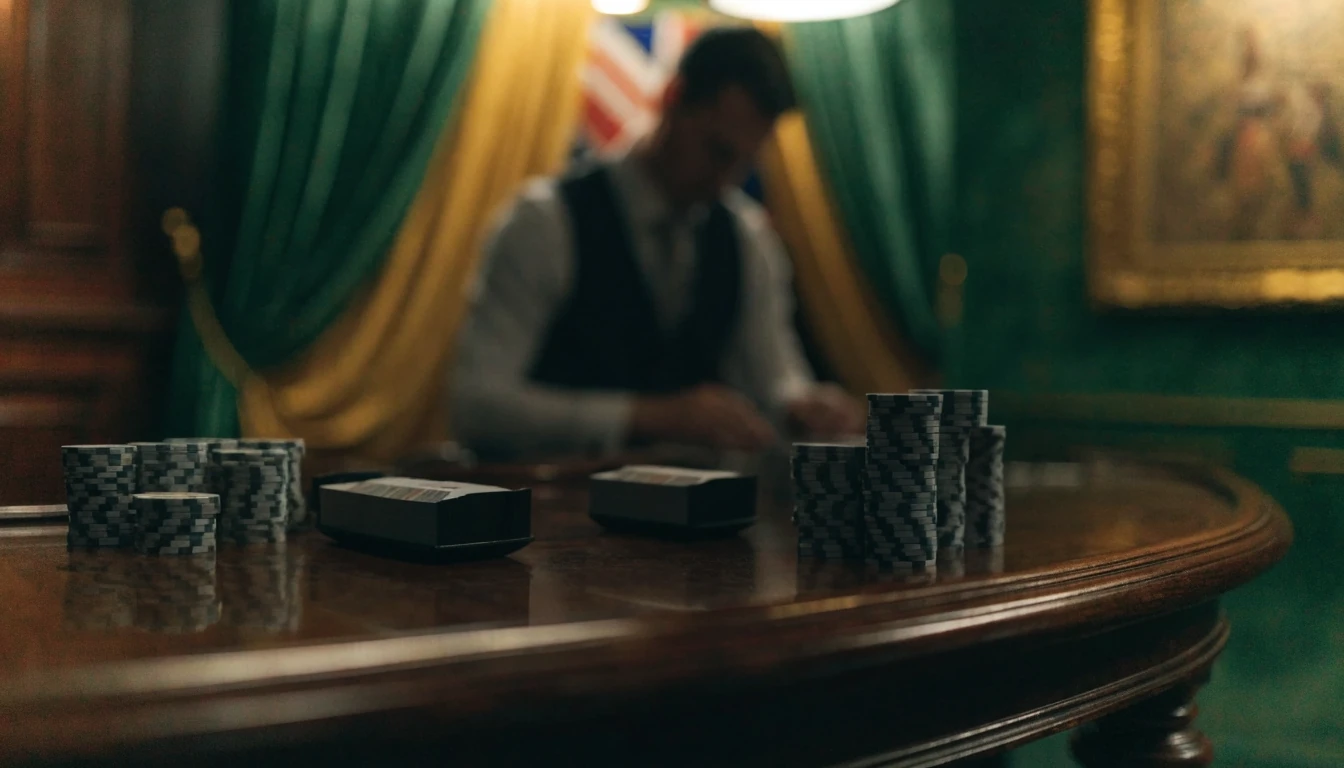
A Lightning Roulette table still sits within a familiar family of roulette games, but the name alone does not identify which underlying wheel is in use. The important distinction is between the European and American versions. Their layouts look much alike at a glance; the extra green pocket on the American wheel is easy to overlook, yet it changes the chance of a selected number coming up.
European Roulette has a single green pocket, marked 0. American Roulette has that pocket and a second green one, marked 00. The other pockets carry numbered outcomes. In either version, a straight-up selection wins when the ball stops in the pocket bearing the chosen number. The green spaces are not decorative gaps in an otherwise neutral layout: they are possible results, and the American wheel has one more of them.
That difference is reflected in the odds. A number selection in European Roulette has one chance in 37; on an American wheel, it has one in 38. The additional outcome makes a particular number less likely to be drawn. It is a small-looking alteration with a precise consequence, the sort of design choice that turns a familiar game into a less favourable proposition without changing its appearance much.
For someone considering a Lightning Roulette casino game in the UK, the useful distinction is therefore not simply between a themed table and a plain one. It is between the roulette variant named in the table information and the variant actually offered. A game title may foreground its special presentation, while the underlying wheel determines whether it uses the single-zero or double-zero arrangement. Table rules and the displayed layout are the practical places to establish that.
This matters before any attention is given to a multiplier or a dramatic studio effect. Such features may make a table feel unlike ordinary roulette, but they do not erase the meaning of 0 and 00. The standard European and American versions remain different games in a measurable way, even when the surrounding presentation gives them a common label.
The old distinction also shows how casino rules are built: not only through the act of spinning, but through the set of outcomes the table permits. One extra pocket is enough to change the arithmetic. A quiet difference.
A Demo Is Practice, Not a Payout
A demo is a practice setting, not a source of cash. That distinction matters with a game whose name combines a familiar wheel with a more theatrical label: the word “demo” can sound like a harmless route into the same experience, but it does not mean that play produces withdrawable winnings. Any result in a practice setting belongs to that setting.
Interest in a Lightning Roulette demo is understandable. A no-stakes version can seem like a way to learn the interface or see how a game is presented before deciding whether to play for money. But the label alone does not establish what is offered: it does not confirm that a particular casino has a demo, explain how it operates, or promise that its presentation matches a real-money table. Those details depend on the specific offering and its terms.
A demo version is intended for rehearsal and learning the interface; it does not produce withdrawable winnings.
That leaves a useful boundary, even without assuming that every casino provides the option. If a practice version is available, its purpose is rehearsal, not earning. A display of pretend credits, if one appears, is not a balance that can be withdrawn. Nor does a run of favourable results in practice predict what will happen in real-money play. Roulette outcomes remain separate from the history shown in a demo; previous results do not tell the wheel what to do next.
The phrase “play Lightning Roulette demo” can also blur two different activities. One is testing a game without staking money; the other is gambling, where real funds are at risk and any return depends on the game’s rules and outcome. Moving from one to the other is not merely changing a screen. It changes the financial consequence of every bet.
A demo should therefore be treated as a limited way to become familiar with a presentation, where one exists. It is not evidence of likely winnings, a substitute for checking the rules, or a guarantee that a real-money version will feel identical. Practice can remove some unfamiliarity. It cannot remove chance.
For UK readers, the same distinction applies to a Lightning Roulette demo in the UK: “demo” describes practice, not a special route to a payout. No amount of time spent in a non-money setting turns its results into real winnings.
This section is for entertainment purposes only and is not gambling advice. A demo may be practice. It is not profit.
The Dealer, the Wheel and the Pace of Live Play
A live dealer roulette table brings a physical object into a medium built from screens: the wheel is real, and a human dealer sets it spinning. That distinction is more than atmosphere. Computerised roulette produces outcomes with a Random Number Generator; live play places the wheel and its operation in view, with the dealer carrying out the familiar ritual in real time.
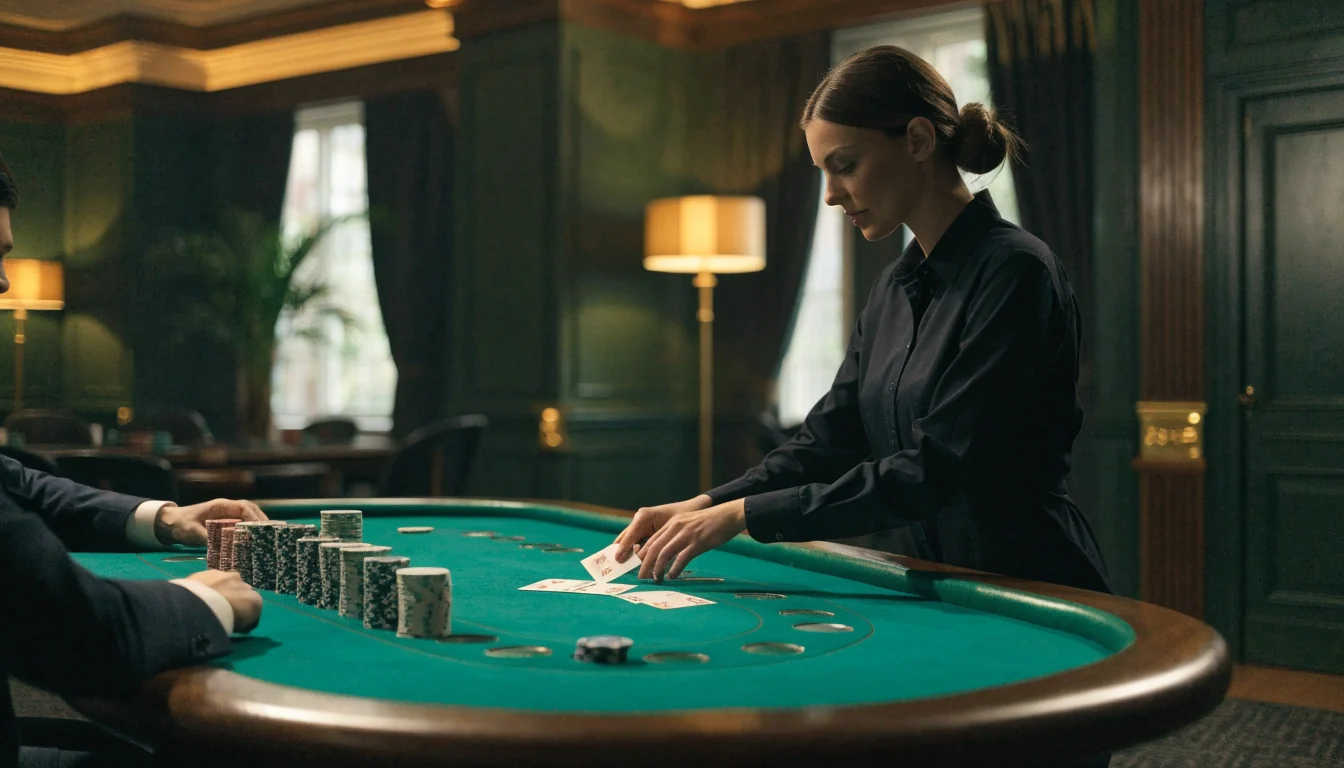
The ritual takes time. There is a spin to make, a ball to follow and a result to settle before the next round begins. Digital roulette can move more quickly because it does not wait for a person to perform those actions. Live play is slower by comparison, and that pace is part of the format rather than a technical flaw to be fixed.
It also changes the practical conditions. A stream needs a stable internet connection if the wheel, dealer and game interface are to remain in step. A weak connection can interrupt the view at precisely the moment the live format is meant to provide one. The screen is not a window if the signal keeps closing it.
Minimum bets are higher in live games than in digital versions. That difference helps explain why the two formats can feel socially and financially distinct, even when the game name is the same. The physical table has operating costs and a human presence; the digital version can repeat its process without either. There is no need to romanticise the distinction. A dealer is not a guarantee of a better result.
For anyone considering a Lightning Roulette live dealer casino in the UK, the central attraction is therefore the visible performance: a person, a wheel and a round that unfolds at human speed. The name may suggest spectacle, but the live element is the dealer’s handling of a real wheel, not a promise about what the ball will do. The format makes the process observable; it does not make chance obedient.
Payment Restrictions
Remote gambling operators in the UK cannot accept credit-card payments for gambling, including funds routed through a money service business.
That slower rhythm can suit people who prefer to watch each stage rather than move rapidly between automated rounds. It can also feel less convenient when a connection falters or the table’s pace seems deliberate. Live play asks for attention and patience. The wheel turns; the stream must hold.
Playing Online Within Clear Limits
Playing Lightning Roulette online in the UK is still gambling, even when the wheel arrives through a screen and the stakes are entered with a click. The distance can make money feel less tangible; a preset boundary gives it a value before play begins. A budget should be decided in advance, treated as the full amount available for the session, and left unchanged once the game is under way.
That boundary applies to winnings as well as losses. A losing run can invite the thought that one more bet will repair the session; a win can make further play seem harmless because the money feels newly acquired. Neither changes the limit. Continuing to stake beyond it turns a planned leisure expense into an open-ended one. Roulette offers no reason to assume that a previous result makes a later one due.
Payment rules form part of that boundary. Remote gambling operators in the UK cannot accept credit-card payments for gambling, including credit-card funds routed through a money service business. A wallet cannot be used for gambling if it allows credit-card funds to be spent there. This is not a budgeting preference dressed as a rule: the restriction is intended to keep borrowed credit out of gambling payments.
A clear limit also separates entertainment from financial expectation. Roulette is not a way to recover bills, settle debts or produce dependable income. The atmosphere may be composed to make each decision feel consequential; the household budget remains less theatrical and more important. If the set amount is gone, or the session has reached its intended end, stopping is the whole point of having set a limit.
The choice of stake does not make that discipline unnecessary. Roulette bets carry a house advantage, and a smaller stake does not turn the game into a source of certainty. The sensible measure of a session is whether it stayed within its boundary, not whether the final result happened to be favourable.
This material is for entertainment purposes only and is not gambling advice.
The House Edge Beneath the Online Game
Every roulette bet carries a mathematical cost, though the cost varies with the kind of wager. A straight-up bet, placed on a single number, has a house edge of 2.9%. Other bets have an edge of 2.7%. The difference is small, but it belongs to the structure of the game, not to the speed of the wheel or the setting in which it appears.
The house edge describes the casino’s expected advantage across play; it does not predict the result of an individual spin. A number that has appeared often does not become more or less likely on the next spin, and a record of past results cannot forecast a future Lightning Number. Statistics can describe what has happened. They do not lean over the wheel and whisper what comes next.
That distinction matters when an online Lightning Roulette casino game adds a feature to the familiar roulette format. The visual drama may change how a round feels, but it is not evidence that the underlying odds have changed. The relevant terms are those shown for the particular table and bet, rather than an assumption that every roulette variant has identical mathematics.
For the player, the house edge is neither a promise of a loss on each spin nor a route to a reliable win. It is the long-term arithmetic built into the game. A short session can depart from that expectation in either direction; the arithmetic waits.
A camera can make the wheel feel close. The margin remains mathematical.
Is the house edge the same at all online live-dealer casinos?
No. In roulette, the stated house edge varies by bet: it is 2.9% on straight-up bets and 2.7% on other bets.
How does the house edge change between games?
It can vary with the roulette bet: straight-up bets have a 2.9% house edge, while other bets have a 2.7% edge. In French Roulette, an even-money bet loses only half when the ball lands on zero.
What is the difference between European and American Roulette?
American Roulette has both 0 and 00, while European Roulette has only 0. The stated odds of winning are 1 in 38 in American Roulette and 1 in 37 in European Roulette.
Prepared by the Nine Casino 2 editorial staff.