Deal or No Deal Casino UK: Format and Game Rules
 Available in GB
The article explains the sealed-case format and distinguishes stated mechanics from details that cannot be verified about casino play.

Table of Contents
- The Deal-or-No-Deal Format, and the Rules Around It
- How the Slot’s Bonus Game Unfolds
- Playing Online: Offers, Switching and Return
- Qualification, Top Up and the Deal-or-No-Deal Game
- Double Action and the Final Choice
- Free Spins and Box Clever: What Can Be Established
- What the Last Briefcase Represents
- Reviewing the Game Without Guessing at Its Features
- Perfect Play and the Limits of Strategy
- Free Online Play: What the Verified Details Do—and Don’t—Say
The Deal-or-No-Deal Format, and the Rules Around It
Deal or No Deal turns uncertainty into a public ritual. A contestant faces a set of sealed briefcases, each representing a possible sum, while the Banker makes offers as the game progresses. The tension does not come from solving a puzzle in the usual sense: the contents remain hidden, and the contestant must decide how much weight to give an offer when the value of the remaining case is unknown.
In the main television format, the play begins with sixteen briefcases. Three are opened in the first round, after which the Banker makes an offer and the host puts the question that gives the programme its name: “Deal or No Deal?” That exchange is repeated through the show, with three Banker offers preceding the final stage. The contestant’s underlying prediction is whether the money in the last briefcase to be opened will be worth more than the Banker’s offer. The decision is simple to state. Its emotional labour is the point.

The format borrows the language of finance without becoming a market. The Banker appears to price uncertainty, but the contestant is not given a transparent calculation to inspect. Instead, the offer becomes a social event: it is announced, weighed against the contestant’s hopes, and often discussed with those around them. The audience can see the same unopened cases but cannot see their contents. Suspense is made from that shared ignorance.
A casino adaptation carries the title and the broad idea into a different setting. That resemblance does not, by itself, establish that every version follows the television sequence or includes the same elements. A Deal or No Deal slot is a casino product, not the programme itself; its rules depend on the particular game. The distinction matters because a familiar title can make a game feel self-explanatory before its own instructions have been read. Familiarity is not a rulebook.
The setting also changes the question being asked. On television, the contestant’s choice is staged as a human drama and watched by an audience. In an online casino, the game is offered as gambling, under rules that govern the operator as well as the activity. A themed presentation does not place a casino game outside those rules. Nor does the appearance of a Banker make the game a negotiation with a person who can alter its outcome. The screen supplies a character; the regulatory system supplies the obligations.

The British regulatory frame
In Great Britain, the UK Gambling Commission is the sole regulator of commercial gambling. Its remit includes online casinos and remote gambling offered to consumers in Great Britain, even when the operator’s key equipment is located elsewhere. Moving servers across a border does not, on its own, remove a service aimed at the British market from the Commission’s reach.
The legal framework is not identical across every part of the United Kingdom. The Gambling Act 2005 provides the principal gambling legislation for England, Wales and Scotland; Northern Ireland sits outside that Act’s territorial scope. That distinction is worth keeping in view when broad descriptions of “UK gambling law” are used. The Commission’s role as regulator of commercial gambling in Great Britain should not be casually converted into a claim that every part of the UK has precisely the same legislative arrangement.
The Commission issues operating licences to gambling businesses and personal licences to individuals carrying out specified roles within the industry. Those are different forms of permission: one concerns the business offering gambling, the other people involved in operating it. For a remote casino serving Great Britain, the relevant regulatory question is therefore not simply where its website is hosted, but whether its activity falls within the British licensing framework.
This is a public arrangement, not merely an administrative detail. A regulator sets the conditions under which commercial gambling is offered and can hold licensed businesses to those conditions. The state’s role is not to make the uncertainty disappear; uncertainty is the product being sold. Its role is to establish who may offer it and within what system of oversight. A tidy distinction, where one is needed.
For anyone considering a Deal or No Deal casino game in Britain, the television premise and the casino’s legal status are separate matters. The familiar briefcases explain the theme; they do not certify the operator or define the game’s precise rules. Those belong to the casino product itself and to the regulatory framework in which it is made available. The show supplies the theatre. Licensing supplies the boundary.
Attention: The Gambling Act 2005 provides the principal legislation for England, Wales, and Scotland, but Northern Ireland sits outside that Act’s territorial scope.
How the Slot’s Bonus Game Unfolds
A Deal or No Deal slot machine game borrows its central tension from a familiar ritual: open a case, learn what it contains, then decide whether the offer on the table is worth taking. In the bonus game, the rhythm is not simply a run of prizes. It is a sequence of briefcase openings interrupted by the Banker, whose offers turn each pause into a decision.
The player begins the bonus round with briefcases still unopened. They are opened in batches, and the Banker makes an offer after a batch has been revealed. At that point, the choice is plain: accept the amount offered and stop, or decline it and carry on opening cases. The process repeats, so the bonus game alternates between uncovering information and deciding what to do with it.
That pattern gives the round its shape. Each opening removes a possibility from the remaining set, while each offer presents a reason to end the uncertainty. The decision is not made in a vacuum: the player has seen what the opened briefcases contained, but the unopened ones remain unknown. The Banker’s offer arrives at precisely that boundary between what has been disclosed and what is still concealed.
There are four Banker offers before the final stage. That structure provides several opportunities to leave the round early rather than treating the bonus as an all-or-nothing march to its end. An offer can be accepted, or play can continue. Declining does not itself settle the result; it leads back to the briefcases, and a later offer may bring the same choice into sharper focus.

A Deal or No Deal online slot game therefore differs from a conventional sequence in which each spin stands alone. Its bonus round asks for a decision that carries forward through the rest of the feature. The player is not merely watching symbols resolve. They are choosing whether the certainty of an offer outweighs the possibility represented by cases that have not yet been opened. The game supplies the dilemma; it does not supply a private insight into what remains hidden.
The Banker’s role is structural. The offers divide the openings into stages and give the player a point at which to stop. They are not just decorative interruptions between reveals. Without them, the bonus would be a sequence of disclosed prizes; with them, it becomes a negotiation staged around incomplete information. The bargaining is one-sided, of course. The Banker makes the offer, while the player decides whether to accept it.
The pace depends on the alternation. A batch of cases is opened, the offer arrives, and the player chooses between stopping and proceeding. Then, if play continues, another group of cases is revealed before the next offer. The rules establish this repeated pattern without requiring every opening to feel like a separate game. Each decision belongs to the same unfolding round.
This is the point of the format for anyone looking to play a Deal or No Deal slot online: the bonus is built around a chain of choices, not merely a single prize reveal. The player can accept an offer before the round reaches its final stage, or continue through the remaining openings and face the next decision. Four offers stand between the start of this process and that last stage. No offer obliges the player to continue, and continuing does not mean an offer has already been accepted.
Bonus Game Sequence
Cases are opened in batches, removing possibilities from the remaining set.
After a batch is revealed, the Banker makes an offer that the player can either accept to end the round or decline to continue.
This process of uncovering information and deciding whether to take the offer repeats four times before the final stage.
Before the final stage, the remaining two briefcases can be switched before they are opened. That possibility adds a final choice to the sequence of offers and reveals. It does not remove the uncertainty: the contents are still concealed until the cases are opened. The switch is a choice about which unopened case to keep, not a way of seeing what either one contains in advance.
For someone considering a Deal or No Deal casino game online, the useful distinction is between the repeated offer decisions and the final-stage choice. The early part of the bonus game repeatedly asks whether to take the Banker’s offer or carry on. Near the end, the two remaining briefcases introduce the option to switch before their contents are revealed. These moments are related, but they are not the same decision.
There is no elaborate strategy hidden in the wording of the choice. An offer can be accepted, or the sequence can continue; the briefcases disclose their contents as they are opened, not beforehand. The bonus game turns that limited knowledge into suspense and gives the player several stopping points. A tidy little negotiation.
Playing Online: Offers, Switching and Return
In the online suitcase game, the Banker’s offers arrive while cases are being opened. Each offer creates a pause in a process otherwise governed by elimination: the contents of a case are revealed, the remaining possibilities narrow, and a cash amount is put forward as an alternative to continuing. The offer is not simply another prize on the board. It changes what the player must decide.

Accepting a Banker offer ends that game, and the player collects the amount offered. Continuing means leaving the offer behind and carrying on with the game. That distinction is fundamental. An offer is not added to a later prize, and accepting it does not preserve a chance to return to the unopened cases. The choice draws a line between settling for the stated amount and staying with the unresolved case outcome.
This structure gives the Banker a peculiar role. The offer is made in the language of negotiation, though the game is not a negotiation between equal parties: the player can accept or refuse, but cannot name a counter-offer. The apparent conversation is therefore a designed decision point. A number is placed beside uncertainty, and the player must decide whether the certainty of that amount is worth more than continuing.
The switch after the fourth offer
The online game allows a switch between the two remaining suitcases after the fourth Banker offer. This is a distinct decision from accepting or rejecting an offer. It concerns which of the two cases remains associated with the player, rather than whether to take the Banker’s amount.
Switching does not guarantee a better result. Nor does staying guarantee that the original choice was the right one. The action changes the case selected, but the information available at that point does not reveal what either unopened suitcase contains. The switch is therefore a choice under uncertainty, not a method for extracting a hidden value from the game.
That distinction matters because the language of switching can suggest an advantage: a player might feel that abandoning an earlier selection is a correction, or that keeping it is an expression of confidence. Neither feeling supplies information about the contents. The mechanic offers a final change of selection; it does not turn intuition into evidence.
The option to switch between the two remaining suitcases becomes available only after the fourth Banker offer has been made.
The four-offer point also gives the game a recognisable rhythm. Offers are made as suitcases are opened, and the player’s position changes as possibilities are removed. By the time switching becomes available, the question is no longer only whether to accept the Banker’s money. The player may also have to decide which remaining case to carry forward. Two separate uncertainties meet at the same stage.
What the return figure says
A specialist review quoting the game’s help files reports an expected return of 95.42%. That figure belongs to the particular game documentation described there; it should not be read as a general return rate for Deal or No Deal titles, casino slots, or online casinos as a whole. A title, version, or set of game rules may differ, so the figure is meaningful only when attached to the relevant game and its stated help information.
Expected return is a statistical measure of the portion of stakes a game is designed to return over extensive play, not a promise about the outcome of an individual session. It does not predict what a particular player will collect, and it does not determine whether a Banker offer will be attractive at the moment it appears. The offer decision belongs to the game’s immediate choice structure; expected return describes a broader mathematical property.

Those ideas are often blurred in discussion of an online slot. A return percentage can sound like a personal forecast, while a Banker offer can feel like a verdict on the player’s progress. Neither interpretation follows from the figure itself. The stated return does not tell a player what an unopened suitcase holds, whether to switch, or whether an offer is preferable to continuing. It is not a strategy in numerical clothing.
The phrase “Deal or No Deal online slot” can also cover different presentations of a familiar premise. The specific details described here are the suitcase offers, the option to switch after the fourth offer, and the return figure attributed to the game help files in a specialist review. They do not establish that every online casino version works in precisely this way, or that a separately labelled Slingo version shares these mechanics. Similar branding is not proof of identical rules.
For anyone comparing a deal or no-deal slot machine with another casino game, the help information attached to the actual title matters more than the broad resemblance to the television format. The stated return belongs to a source and a version; the switching rule belongs to a particular game structure. Keeping those boundaries visible prevents a familiar name from doing too much work.
A compact premise, then, but not a simple promise. An offer can be banked, the game can continue, and a final switch can be made. The figure in the help files offers a separate kind of information, not an answer to those choices. The Banker proposes. The player decides.
Qualification, Top Up and the Deal-or-No-Deal Game
Choosing a Deal or No Deal casino in the UK for 2026 calls for a look at the practical details available before you play. This list gives a concise reference point, including the stated payout speed for each operator.
Payout speed: 1-3 business days WinBeast lists a payout speed of 1–3 business days, a useful detail to consider when assessing a casino for Deal or No Deal play.
Payout speed: 1-3 business days SpinFormula lists a payout speed of 1–3 business days. That gives readers a stated timeframe to factor into their choice.
Payout speed: 1-3 business days EvoSpin lists payouts as taking 1–3 business days, offering a clear practical detail for prospective players.
Payout speed: 1-3 business days Britsino lists a payout speed of 1–3 business days. This is the available detail to consider when looking at the operator.
Payout speed: 1-3 business days Amunbet lists a payout speed of 1–3 business days, giving players a stated expectation for withdrawals.
Payout speed: 1-3 business days BeOnBet lists payouts as taking 1–3 business days. The stated speed is a practical point for readers to weigh.
Payout speed: 1-3 business days Chanze lists a payout speed of 1–3 business days, providing a clear detail for anyone considering the operator.
Payout speed: 1-3 business days Dieselwin lists payouts as taking 1–3 business days. This is the available factual point for readers to use as a reference.
Payout speed: 1-3 business days NightLuck lists a payout speed of 1–3 business days, a practical detail to keep in mind when considering the operator.
Payout speed: 1-3 business days NightWin lists a payout speed of 1–3 business days. The stated timeframe offers a concise point of reference for prospective players.
The game has a threshold before its familiar briefcases appear. Players first qualify; only then does the sequence move through an optional Top Up and into the Deal or No Deal game. That order matters. Top Up is not the qualifying test itself, nor is it a separate route around it: it sits between qualification and the main game, where it may add to prizes.
Qualification depends on the rings. All three must land on a gold slice. The condition is exact, and it gives the opening stage a small ritual of its own: before the show’s drama of choices and offers, the game asks for a particular alignment. The rings are not decorative scenery. Their result determines whether the player proceeds.
After qualifying, the player may choose Top Up. Its stated purpose is to add to prizes, making it an optional step rather than a compulsory part of entry. The distinction is useful because a sequence can look like one continuous feature while containing different decisions: first the qualifying condition, then the choice to use Top Up, then the main Deal or No Deal game. Each stage has a separate role.
Game Entry Process
All three rings must land on a gold slice to proceed.
After qualifying, the player may choose to use Top Up to add to the prizes.
Following these stages, the player enters the Deal or No Deal game.
This progression also helps distinguish the game from the television format that gives it its name. On the show, the contestants’ position develops around briefcases and the host’s question. In the casino version described here, entry begins with the rings. The resemblance lies in the branded game and its later premise; the route into play has its own structure.
That makes searches for a demo or free-play version a question of access, not a description of the qualifying mechanic. The sequence itself can be stated plainly: all three rings must land on a gold slice; a player who qualifies may use Top Up; the Deal or No Deal game follows. Whether a particular casino offers a demo, a free mode, or conditions attached to either is not established by that progression. A title containing the words “free play” does not, by itself, settle how access works.
The same care applies to searches for a Megaways edition. The qualifying condition above belongs to the described Deal or No Deal sequence; it does not establish that a Megaways-branded version uses the same stages, or that such a version is available at any particular casino. Similar names can invite assumptions about shared features. The name is not the mechanics.

Top Up is therefore best understood in its narrow place in the chain. It may add to prizes after qualification, but it does not alter the stated requirement that every ring land on gold. Nor does the option turn qualification into a guarantee of any particular result later in the game. It is a bridge between the opening test and the main feature, not a promise about what follows.
The design puts a gate before the spectacle. First, the rings must align; then comes an optional addition; only after that does the central game begin. A compact threshold, and a deliberate one.
Double Action and the Final Choice
At the end of the game, the decision is no longer about how many briefcases to open. It is about what to do with the choice that remains: take the Banker’s offer, keep the prize attached to the player’s own briefcase, or exchange it for the last unopened one. The options are simple to state. Their emotional weight is less tidy.
Accepting the offer ends the game, and the player collects the amount offered. It replaces uncertainty with a known outcome; whether that feels like relief or regret depends on what the unopened briefcase would have held. Rejecting the offer means taking the prize in the player’s briefcase instead. Switching transfers that uncertainty to the remaining unopened briefcase. None of these choices reveals the contents before the decision is made.
- Accept the Banker’s offer to secure a known outcome.
- Switch suitcases to change which case determines the result.
- Assume switching suitcases reveals the contents in advance.
- Expect the final choice to be influenced by no-deposit bonus terms.
That is the point at which the title’s question becomes less theatrical and more personal. The Banker’s offer gives uncertainty a price, while the two briefcases preserve it. A player choosing to switch is not selecting a better-known prize; the value inside the other case is still hidden. The decision changes which case determines the result, not what is known about either case.
“Double Action” may appear in searches for a particular Deal or No Deal slot or casino game, but the name alone does not establish a specific product’s rules. The final-stage choices described here should not be treated as proof that every game using that label follows the same sequence. The title may prompt expectations; only the game’s own rules can settle them.
The same distinction matters for searches about a Golden Box or a Megaways version. Those words do not alter the final-choice structure set out here, and they are not enough to confirm that a particular version is available or that it includes these options. A label is not a rulebook.
Nor is a no-deposit bonus one of the final choices in the game. It belongs to the separate subject of promotional terms. Without published terms for a specific offer, its eligibility, value or conditions cannot be described responsibly. The final decision itself needs no embellishment: accept the offer, keep the original briefcase prize, or switch to the other unopened case.
There is no fourth door.
Free Spins and Box Clever: What Can Be Established
Free spins and a feature called Box Clever suggest extra ways into a Deal or No Deal game. The name alone, however, does not explain how a particular version works. What can be described without turning a label into a promise is the point at which a Banker offer becomes a settled result.
When an offer is accepted, the game ends and the player collects the amount offered. That is a clear boundary: acceptance is not merely a pause in the game or a step towards another round. The offer becomes the outcome, and play of that game is finished.

This matters when a game is being considered through terms such as “free spins” or “Box Clever”. Those words may appear to point towards an added feature, but they do not alter the known consequence of accepting an offer. Nor do they, by themselves, explain how a feature would be entered, what it might award, or whether it belongs to the particular version under discussion. A title can carry a suggestion; the rules decide what happens.
The Banker’s offer is therefore the solid point in this narrow part of the game. It puts a value on ending the current play, and accepting it closes that play with the offered amount collected. The choice is consequential precisely because it is final for that game. No extra feature should be read into the act of acceptance.
There is a small difference between the language of attraction and the language of rules. Free spins promise, in ordinary promotional usage, more play; a distinctive title such as Box Clever can sound like the name of a special mode. Neither phrase is a substitute for the actual mechanics. Here, the concrete outcome is simpler: take the Banker’s offer, and the game ends with that amount awarded.

A clean ending.
What the Last Briefcase Represents
The question behind “what’s in your box?” is not simply about a hidden sum. It is about whether the amount concealed in the final briefcase is worth more than the Banker’s offer. In the main game show, contestants make that comparison: they predict whether the money in the last of 16 briefcases to be opened will exceed the amount offered by the Banker.
That makes the final case a small object carrying a large uncertainty. Its contents are fixed, but remain unknown while the decision is made. The Banker’s offer, by contrast, is visible and definite. One side of the comparison is a known amount; the other is a possibility. The suspense comes from having to judge them without being able to inspect the last case.
The briefcase therefore stands for more than a prize. It is the contestant’s remaining claim on chance, measured against a proposal that turns uncertainty into certainty. Taking the offer means treating the known sum as preferable to the unresolved possibility. Refusing it means trusting that the hidden amount may be higher. Neither choice changes what is inside. It changes how the contestant relates to not knowing.
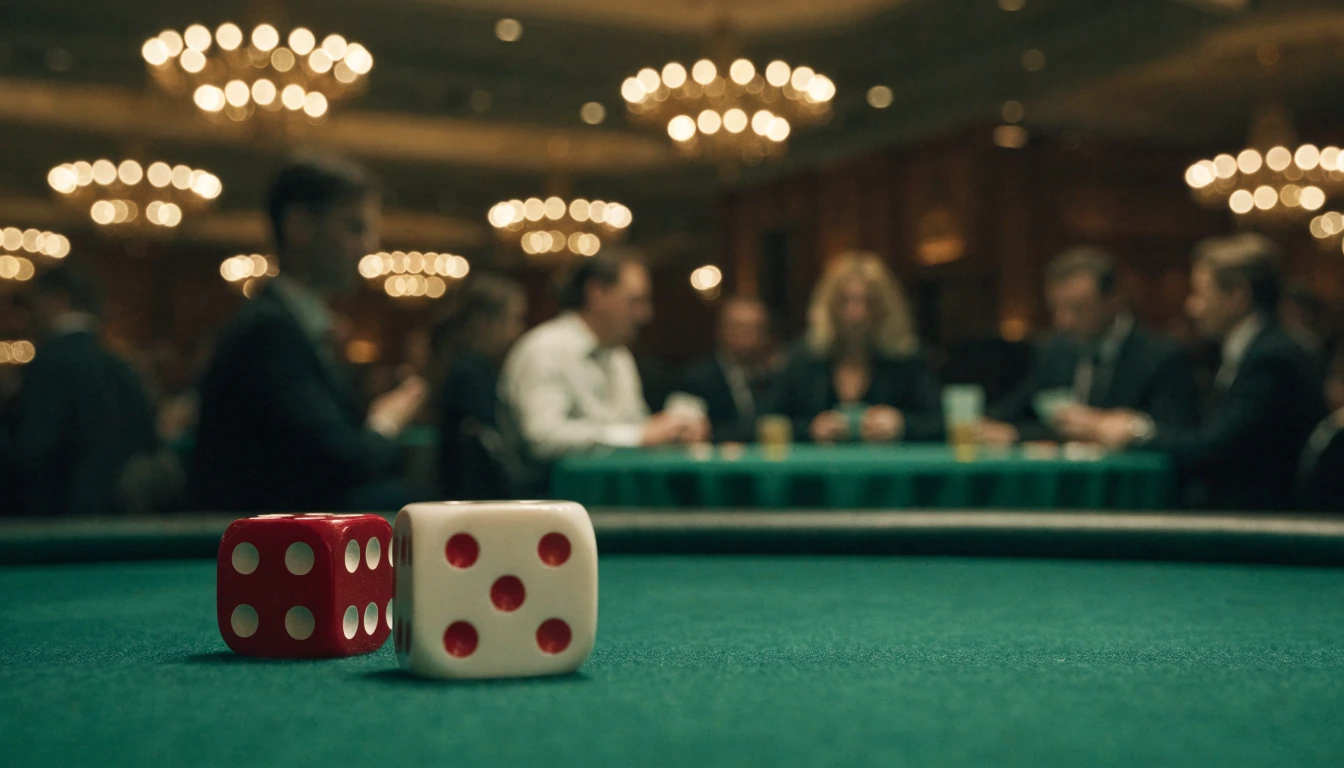
That contrast is the show’s central device. The Banker is not merely making a price; the offer gives uncertainty a competing value. The unopened case has no practical worth to the contestant until its contents are revealed, yet its possible value shapes the decision before then. A sealed container becomes a test of judgment, nerve and appetite for risk.
This is also why the phrase “what’s in your box?” carries more dramatic weight than a request for a reveal. The answer matters because it resolves a comparison already made under uncertainty. The briefcase is both a physical object and a symbol of the value that cannot yet be confirmed.
A casino adaptation may draw on that familiar premise, but the show’s comparison remains distinct: one unknown amount, one Banker’s offer, and a choice about which carries greater weight. The last case is not a promise that the contestant will find a better outcome. It is the unresolved half of the bargain. A neat little human dilemma.
Reviewing the Game Without Guessing at Its Features
A useful review begins with what can be pinned down, rather than with the promise suggested by a title. A specialist review reports that the game’s help files state an expected return of 95.42%. That is a figure attributed to those files, not a guarantee about an individual play session or a measure of how entertaining the game will feel. Return describes an expectation across play, not a forecast for a particular player.
That distinction matters in a game built around suspense. A stated return can inform an assessment of the game’s mathematical profile, but it cannot tell whether its presentation is engaging, how often a particular outcome will appear, or what any single session will produce. Those are different questions, and a percentage should not be made to answer them all.

The same restraint applies to reviews of Deal or No Deal Double Action and versions labelled What’s in Your Box. A name can suggest a variation, but it does not establish the rules, features or relationship to another edition. Treating the titles as proof would turn a review into an exercise in invention. The label is not the game.
A sound assessment therefore separates the reported return figure from claims about named versions. The return figure belongs to the help-file information described in a specialist review; it should not be presented as a universal rate for every Deal or No Deal casino game. Nor does it settle whether a particular edition has extra stages or altered choices. Those judgements require edition-specific evidence, not inference from branding.
There is little glamour in that boundary. Still, it is where a review earns its usefulness: by saying what a figure can show, and refusing to make it stand in for everything else. A clear account of the stated return is more valuable than confident detail assembled from a title alone. The number has a proper place; the rest must be earned.
Perfect Play and the Limits of Strategy
The phrase “perfect play” suggests a route through the game that can be followed without uncertainty. The decisions available in the bonus game are more modest: after batches of briefcases are opened, the Banker makes an offer, and the player chooses whether to take it or keep going. There are four offers before the final stage. At that point, the remaining two briefcases can be switched before they are opened.
That is a sequence of choices, not a promise of control over the result. Accepting an offer ends the decision-making; continuing preserves the possibility of another offer and another choice. Switching changes which of the last two cases is held, but the act itself does not establish what either contains. The suspense depends on that gap between the decision and the hidden outcome.
A strategy can still describe how someone prefers to behave. One player might value certainty and accept an offer; another might prefer to continue, or switch at the last stage. Such preferences make a decision consistent, not infallible. The Banker’s offer arrives at a particular point in the sequence, but the rules described do not turn it into a reliable signal that one choice will always be better.

That distinction matters because “perfect play” is often taken to mean a guaranteed best route. Here, the mechanics identify the available moves; they do not supply a universal rule for choosing among them. The sequence can be understood without pretending that every offer or switch has a predictable consequence.
There is a human habit behind the search for a perfect system: uncertainty is easier to bear when it can be dressed as expertise. Deal or No Deal makes that wish visible. Its structure offers decisions, and its drama comes from what those decisions cannot settle. A method may organise a player’s choices. It cannot make the unopened case disclose its contents in advance.
Not quite a system.
Free Online Play: What the Verified Details Do—and Don’t—Say
Free online play is a separate question from how the game works. The described progression starts with qualification. Top Up is optional and can add to prizes; after that, the player enters the Deal or No Deal game. Those steps explain the route into the game, not whether that route is available without staking money.
The distinction matters because a playable game sequence does not, by itself, mean there is a free-play version. Nor does it establish whether access would require registration, be limited to a particular setting, or come with other conditions. None of those details can be inferred from the qualification and Top Up stages.
So the game can be described in terms of its progression, but free access should not be presented as a confirmed feature. The label “free” can refer to different arrangements, and guessing at which one applies would turn a search for a straightforward answer into an invented promise.
There is a small but useful boundary here: qualification and optional Top Up belong to the game’s stated sequence; the availability and terms of free online play remain a separate matter. A clear description of the former does not settle the latter. Until an operator identifies a free mode and explains its conditions, it is safer to treat free access as unconfirmed rather than assume that the game can be played without a stake.
Written by the editors at Nine Casino 2.