
Casinos That Accept Boku in the UK: Deposits and Terms
 Available in GB
Boku can fund a casino account, but promotions may exclude phone payments and the method does not provide a way to cash out.

Table of Contents
- Boku at the Slots: A Narrow Route In
- Why the Boku Casino List Has Contracted
- The Licence Behind a Mobile Deposit
- Slots, Phone Payments and the Limits of Play
- What a Boku Payment Actually Charges
- When Boku Is Replaced by Another Route
- Direct Boku Acceptance, Without the Guesswork
- From Cashier to SMS Confirmation
- A Deposit Method, Not a Way to Cash Out
- Boku Does Not Establish a Casino’s Gamstop Status
Boku at the Slots: A Narrow Route In
Boku can sit at the entrance to an online slots account, but it does not determine what happens once play begins. It is a way to fund an account, not a promise of a welcome offer, bonus spins or access to a particular game. The distinction matters because casino promotions are often presented as if they belong to the whole account, while their terms may treat each deposit method differently.
Pay by Phone deposits are commonly excluded from welcome offers. A casino may accept Boku for deposits and still refuse to count a Boku-funded payment towards a deposit match. The cashier’s acceptance of a method and the promotion’s acceptance of that method are separate decisions. One green tick does not imply another.
A specialist review describes a UK welcome offer as a 100% deposit match up to £100, subject to a 35x wagering requirement. That is an illustration of how a promotion can be structured, not a standing template across casinos. A match may look generous in its headline and become less attractive once the wagering conditions are read. The terms set out which deposits qualify, what must be wagered, which games count and whether a bonus has an expiry date.
When looking at UK casinos that accept Boku, it is useful to consider how quickly withdrawals are processed as well as the payment method. The details below give the stated payout speed for each listed operator.
Payout speed: 1-3 business days WinBeast lists a payout speed of 1–3 business days.
Payout speed: 1-3 business days SpinFormula lists a payout speed of 1–3 business days.
Payout speed: 1-3 business days EvoSpin lists a payout speed of 1–3 business days.
Payout speed: 1-3 business days Britsino lists a payout speed of 1–3 business days.
Payout speed: 1-3 business days Amunbet lists a payout speed of 1–3 business days.
Payout speed: 1-3 business days BeOnBet lists a payout speed of 1–3 business days.
Payout speed: 1-3 business days Chanze lists a payout speed of 1–3 business days.
Payout speed: 1-3 business days Dieselwin lists a payout speed of 1–3 business days.
Payout speed: 1-3 business days NightLuck lists a payout speed of 1–3 business days.
Payout speed: 1-3 business days NightWin lists a payout speed of 1–3 business days.
The distinction between cash and bonus funds also matters at the slots. Bonus money is not simply another name for money deposited through Boku. It may be subject to separate playthrough conditions, and a game’s contribution to those conditions can vary under the operator’s rules. A slot session funded from an account balance therefore does not, by itself, reveal whether the balance is cash, promotional funds or a mixture with different restrictions.
A specialist review reports bonus funds expiring within 30 days and bonus spins within 72 hours. These deadlines should be understood as terms described in that review, not as universal casino rules. The expiry attached to an offer is the one that counts. Where a promotion has several stages, each may carry its own conditions, and a short-lived batch of spins can have a different clock from a matched deposit.
There is also a less obvious question: whether the deposit earns the bonus at all. Bonus eligibility for Pay by Phone varies by operator. Specialist review material confirms that MrQ, Duelz, Mr Vegas and Videoslots accept such deposits for bonus eligibility, but that does not establish the terms of every offer at those sites or guarantee that a particular promotion remains available. Eligibility can depend on the offer selected and its wording. The useful detail is not simply that a casino takes Boku; it is whether the chosen promotion recognises that payment route.


Some specialist reviews report no Boku-specific bonus restrictions on the platforms they assessed, and no dedicated Boku deposit bonus. That is not the same as saying every Pay by Phone deposit qualifies for every welcome offer. A promotion may exclude a payment method without creating a separate Boku bonus, while another offer may allow it. The terms do the sorting.
This is why “slots with Boku” can describe two different things. It may mean an account that can be funded through Boku and used to play slots, or it may imply that Boku unlocks a special slot offer. The first describes a payment relationship; the second needs evidence in the promotion’s conditions. The payment method does not select a game catalogue or improve a slot’s features. It simply changes how the account is funded.
The same care applies to the arithmetic of an offer. A deposit match is not an immediate addition to withdrawable cash. If wagering is attached, the bonus balance remains conditional until the stated requirements are met. Some games may count differently, and bonus terms may set limits on how winnings can be treated. Those are not minor footnotes: they define what the headline amount means in practice.
A phone-funded deposit can therefore be a narrow route into slot play: convenient in the sense that it uses a phone account, but not a shortcut through promotional conditions. The cashier may accept the payment while the welcome offer does not. The bonus page may accept it while imposing its own playthrough and expiry rules. Reading both sets of terms is the difference between seeing a payment option and understanding the offer attached to it.
Attention: Pay by Phone deposits are commonly excluded from welcome offers, and the cashier’s acceptance of Boku does not guarantee that a promotion will recognize the payment route.
The fine print is the offer.
Why the Boku Casino List Has Contracted
The number of UK casinos accepting Boku has been shrinking since 2023. The change is not simply that one payment button has disappeared from a few cashier pages. Pay by Phone has been reshaped: some operators have moved from Boku to another mobile-payment service, while others have removed phone payments altogether. A method that once seemed like a recognisable category of casino deposit is now a narrower feature, present at a small number of UKGC-licensed casinos.
Specialist casino reviews describe Fonix and Siru Mobile among the services that have taken Boku’s place. That shift matters because “pay by phone” is a broad description, not a promise that Boku itself will appear at the cashier. Two sites may both accept a mobile payment and still use different providers. For someone seeking a Boku deposit specifically, the distinction is practical: a general label can conceal the disappearance of the particular route being sought.
There is no single replacement pattern. An operator may switch to another service; another may stop offering mobile payments. The market has not exchanged one universal arrangement for another. It has become less consistent. Even the phrase “casinos accepting Boku” can therefore suggest a larger, more stable group than exists: direct acceptance remains limited, and the group has contracted.
The list also has a short shelf life. A page that recorded an operator’s cashier at one point may preserve that information after the payment option has changed. The text can remain polished and the old claim can remain plausible; neither guarantees that Boku is still available. In a market where operators have been removing or replacing the service, an old mention is not the same as a current cashier option.

That makes broad descriptions especially easy to misread. A casino app, a slots site or a site offering several payment routes is not thereby a Boku casino. Nor does the presence of another phone-payment method establish direct Boku acceptance. The relevant distinction is not between casinos that take phones and casinos that do not, but between those that still offer Boku itself, those using a different mobile service and those offering no pay-by-phone option.
The contraction is also a reminder that payment methods are commercial choices, not permanent features of a casino’s identity. A brand can remain open while its cashier changes. A familiar name on a list does not settle what the payment page currently supports. The mechanism that once made a deposit possible can be quietly replaced, and a description written around the old option can outlast it.
There is a small irony in the way such lists are often read: the more specific the label, the more easily it can be mistaken for a guarantee. “Boku” sounds precise; a copied list may not be. The category has narrowed, but the wording around it has not always kept pace. That gap is where confusion begins.
The sensible distinction is therefore between a historical reference and a live payment option. A list may help explain which services have been associated with casino deposits, but availability belongs to the operator’s current cashier, not to the age or confidence of a description elsewhere. In a shrinking market, an entry should be treated as a lead to verify rather than proof that Boku remains available.
Since 2023, the number of UK casinos accepting Boku has contracted, with some operators switching to alternative mobile-payment services like Fonix and Siru Mobile.
This change should not be mistaken for a universal end to mobile deposits. Some operators have retained the broader idea through other providers, while others have removed it. What has contracted is direct Boku acceptance, not necessarily every form of phone-based payment. That difference matters for anyone comparing sites: a substitute may serve a similar purpose, but it is not Boku, and a casino with no mobile option offers neither.
The pattern since 2023 is thus one of fragmentation. Direct Boku remains available at a small number of licensed casinos, but the wider set of operator choices has shifted towards alternative services or away from pay by phone. The old assumption—that a casino offering mobile deposits will also take Boku—no longer holds. A narrower list, and closer attention to what “mobile payment” actually means, are the consequence.
The Licence Behind a Mobile Deposit
A Boku button in a casino cashier describes a payment route, not the legal standing of the business behind it. The distinction matters. A transaction can be processed through a familiar mobile service while the operator remains responsible for the gambling account, the games and the way customers are treated.
In Great Britain, commercial gambling is regulated by the UK Gambling Commission. Its remit includes remote gambling offered to consumers in Great Britain, even when the operator’s key equipment is located elsewhere. Moving servers across a border does not move the obligation with them. The Commission is the sole regulator for commercial gambling in Great Britain.

That reach is the point of the licensing system: regulation follows the market being served, rather than the geography of a company’s offices or technical infrastructure. A casino’s use of Boku cannot alter that. Nor does acceptance of a phone payment establish that the operator is licensed. Payment providers and gambling regulators perform different roles; one handles a means of funding, the other oversees the business offering gambling.
The Commission issues operating licences to businesses and personal licences to individuals working in relevant roles. For a casino, the operating licence is the essential part of the picture: it authorises the business to offer gambling within the regulated framework. A licence is not a decorative badge attached to a payment method. It belongs to the operator and its permitted activity.
Before depositing, the operator’s licence should be checked on the UK Gambling Commission’s public register. The name on the register needs to correspond to the business behind the casino, rather than merely resemble the brand shown on the site. That small act of verification separates a visible payment option from evidence of regulatory status.
This is especially relevant when a search for casinos using Boku turns up sites with similar names, copied branding or claims about being “UK” casinos. Those descriptions do not establish a licence. A mobile payment may be available at a site outside the Commission’s system, but that fact does not make the site part of Great Britain’s regulated market. The Commission’s jurisdiction over remote operators serving Great Britain consumers is not determined by whether a cashier offers Boku, a card or another route.
Verify Licence
Before depositing, always check the operator’s licence on the UK Gambling Commission’s public register to ensure the business is legally authorized to offer gambling in Great Britain.
The framework also reflects a particular social bargain. Gambling businesses may operate commercially, but not simply on the strength of their own assurances. The state grants permission to the business and retains a regulator with authority over the market. That arrangement is less romantic than the language of choice often used around online entertainment. It is also more useful.
For anyone considering a Boku deposit, the relevant question is therefore not only whether the payment appears in the cashier. It is whether the casino operating that cashier holds a current UK Gambling Commission licence. The method can fund an account; it cannot certify the account’s legal home.
Slots, Phone Payments and the Limits of Play
Boku belongs to the funding side of online slots, not the games themselves. A casino’s decision to accept it does not reveal which slot titles are available, how they play or whether a particular game can be opened on a mobile screen. Payment and play meet at the account balance; beyond that, they are separate arrangements.
That distinction matters because searches for Boku-friendly slot sites can make the payment method sound like a kind of games category. It is not. There is no distinct set of “Boku slots”: a slot is offered by a casino, while Boku is one possible way of putting money into an account. The range of games depends on the operator’s catalogue, not on the payment label in its cashier.
The rules governing play remain the same whichever deposit route was used. In Britain, online slot autoplay is prohibited, and each spin must last at least two and a half seconds. These requirements shape the rhythm of play rather than the way an account is funded. A phone payment cannot switch them off, any more than a card or bank transfer could.

There is also a stake ceiling. Since 9 April 2025, the maximum stake per online slot game cycle has been £5 for adults of every age. Before that change, the lower ceiling for customers aged 18 to 24 was £2, while customers aged 25 and over could stake up to £5. The rule now draws no such age distinction among adults. The game cycle, rather than the payment transaction, is the unit that matters here.
A mobile screen does not alter those conditions either. The device may make a casino’s slots accessible on a phone, but the screen size and the route by which the balance was funded do not create a different class of legal play. Nor does a casino accepting Boku establish that all its games are suitable for mobile use; that is a separate feature of the operator’s offering.
The same separation applies to offers attached to slot play. A casino may have a welcome promotion, but whether a Pay by Phone deposit qualifies is governed by the promotion’s terms, not by the slot catalogue. Pay-by-phone deposits may be excluded, so the bonus conditions need to be read before any deposit is made. A bright banner does not settle the small print.
This is why a search for the best Boku casino games can lead to the wrong comparison. The relevant questions divide neatly: which games a casino offers, what limits apply to slots in Britain, and whether a particular payment route is accepted or qualifies for an offer. Boku answers only part of that picture. A narrow door, not a different room.
- Online slot autoplay is prohibited in Britain.
- Each spin must last at least two and a half seconds.
- The maximum stake per online slot game cycle is £5 for all adults.
What a Boku Payment Actually Charges
A Boku deposit does not draw on a debit card. It is billed through the mobile connection: for a contract customer, the charge appears on the phone bill; for a prepaid customer, it comes out of the available PAYG credit. The casino receives a deposit, while the player’s mobile account becomes the source of the money. That distinction matters when a payment looks, at first glance, like another card option in an online casino cashier.
The bill route can make the transaction feel separate from ordinary spending, but it is not separate money. A contract customer still has to meet the mobile account’s terms, and the charge adds to what is owed to the network. A PAYG customer faces a more immediate boundary: a payment cannot exceed the credit remaining on the phone. A specialist payment review describes insufficient prepaid balance as a reason for a Boku transaction to be declined. No credit on the handset, no deposit.
Limits are less tidy than a single figure on a comparison page might suggest. A specialist casino review gives £30 as the standard UK per-transaction limit, while noting that some casinos or network operators may permit £40 or £50. Other descriptions instead place the emphasis on a network-level daily allowance of £30, with no per-transaction ceiling specified. They also report a much smaller transaction figure, around £10. These accounts do not agree, and the difference cannot be resolved by treating one number as universal. The limit shown or enforced in a particular case depends on the payment arrangement available through the operator and casino.

Daily limits are attributed to the mobile operator in specialist payment guidance, rather than to the casino itself. That is a useful distinction: a casino may show Boku as an available funding option, yet the network can still impose its own boundary. The cashier’s displayed amount is therefore not a promise that the phone account will approve it. Contract status, network rules and the account’s remaining capacity all sit between an attempted deposit and a completed charge.
This is why “casinos accepting Boku” and “casinos accepting Boku card payments” are not interchangeable descriptions. Boku uses the mobile account rather than a Boku-branded debit card. The payment may be available through a casino, but its practical ceiling is partly outside the casino’s control. For PAYG users, even a stated transaction limit is only one constraint: the available balance remains decisive. For bill payers, the operator’s own cap and the network’s handling of charges shape what can pass.
The arrangement is unusually visible in one respect. A bank-card payment tends to arrive as a line in a bank account; Boku places the charge on the same account that connects the phone. Conveniently close, financially distinct only on paper.
When Boku Is Replaced by Another Route
When a casino stops offering Boku, the replacement is not necessarily another version of the same service. Some operators have turned to other Pay by Phone providers; others have removed phone-based deposits altogether. A specialist review describes this shift as part of the changes seen since 2023, but payment menus can change, so a substitute should be treated as an option to verify rather than a permanent feature.
Used by operators such as MrQ and Duelz as an alternative to Boku.
Used by operators such as Mr Vegas and Videoslots as an alternative to Boku.
An indirect route where Boku can be used to fund a Neteller account, which is then used at the casino.
Fonix and Siru Mobile are two alternatives named in that account. It identifies MrQ and Duelz with Fonix, and Mr Vegas and Videoslots with Siru Mobile. Those examples show why “accepts mobile payment” is not a precise answer to whether a casino accepts Boku: the cashier may offer a phone-billed route under another provider’s name, with its own availability and terms.
The distinction matters at the point of deposit. A familiar phone number and a confirmation message may make two services look alike, but the payment brand shown in the cashier is the one that identifies the route being used. A casino offering Fonix or Siru Mobile is not thereby offering a direct Boku deposit. Nor does the presence of one service establish that another is available at the same operator.
There is also a less direct possibility involving Neteller. A specialist review says players can fund a Neteller account with Boku and then use Neteller at a casino that accepts it. This creates a bridge between a phone-billed payment and a casino cashier that does not take Boku directly. It is not the same as paying the casino through Boku: the casino receives a Neteller deposit, and the player is relying on the separate services to work together.
That route has an extra dependency. Boku must be usable for funding Neteller, and the chosen casino must accept Neteller; neither fact should be inferred merely from a casino’s support for Pay by Phone. The payment method visible at the final deposit stage remains Neteller, not Boku. A specialist review’s account of this arrangement is a useful lead, not a guarantee that every account, operator or cashier will support it.

The alternatives therefore fall into distinct categories: another phone-payment provider, no phone-payment option, or an indirect route through Neteller. They are not interchangeable simply because each may begin with a mobile phone. The cashier’s current payment list and the provider’s own conditions determine what can actually be used. No shortcut around the distinction.
Direct Boku Acceptance, Without the Guesswork
A casino offering Pay by Phone is not necessarily a Boku casino. The phrase describes a broad payment category; Boku is one particular service within it. Treating the two as interchangeable turns a specific question into a misleadingly large pool of possibilities. An operator may support another mobile-payment provider, or none at all, while having no direct Boku option.
That distinction matters because the payment name in a general description does not establish what the cashier actually accepts. “Phone payment” can sound like a single shared system. It is not. The provider has to be identified, and direct acceptance means Boku itself appears as the available method—not merely that the casino permits some form of phone-based funding.
A specialist casino review describes the remaining direct-Boku group as small and identifiable, naming Jackpot Mobile Casino and Peachy Games among its examples. That is a more useful way to read the market than assuming every operator with mobile payments belongs on a Boku list. The examples are evidence of a narrow category, not a guarantee that either option will appear for every account or remain available indefinitely.
- Check for the explicit name “Boku” in the cashier.
- Verify the operator’s current license on the UKGC register.
- Assume “mobile payment” or “phone payment” means Boku is available.
- Mistake Boku for a debit card or a card brand.
The wording “Boku cards” or “Boku debit” can also blur the distinction. Boku is not a card brand or a debit card. Its defining feature is that a deposit is routed through the mobile account, rather than being made with a bank card. So a casino that accepts debit cards does not thereby accept Boku, and a casino that lists Pay by Phone still needs to name Boku specifically before it can be treated as a direct-Boku option.
This is a small matter of labels with a practical consequence. Payment pages often group methods under broad headings, while comparisons may use “mobile payment” as shorthand. Neither label is enough to establish direct support. The relevant distinction is between a general phone-payment facility and an explicit Boku entry. Close, but not identical.
A careful Boku casino check therefore asks a narrow question: is Boku itself available, rather than merely another service that charges through a phone account? That standard avoids confusing an alternative provider with the named method. It also keeps a short list honest: the category remains limited, and its boundaries depend on direct acceptance rather than similarity of payment route.
The broader phrase may describe the family. It does not name the member.
From Cashier to SMS Confirmation
A Boku deposit begins in the casino cashier, where the payment method must appear as an available option. Selecting it opens a short sequence: enter the deposit amount, provide the mobile number, then confirm the transaction with the verification code sent by SMS. The phone is not merely a convenient screen for the process; its number identifies the route through which the payment is authorised.

That sequence is straightforward, but it does not make Boku universal across casino cashiers. A site may accept Pay by Phone through another service, or offer no such option, without accepting Boku itself. The method has to be named in the cashier before the steps can be completed. A familiar phone-payment logo is not enough.
The amount menu can impose its own small piece of arithmetic. A specialist review describes Boku deposits as available only in sums divisible by ten, with £10, £20 and £30 given as examples. On that account, a £5 deposit would not fit the stated increments. This should be treated as a reported condition, not a guarantee about every cashier: the options shown at the point of payment are the practical test, and payment arrangements can differ between operators.
Once the amount and number are entered, the SMS code is the final confirmation. It links the requested deposit to the mobile account being used, rather than to a Boku card; the process is based on a phone number and a confirmation message. An incorrect number or an uncompleted verification leaves the sequence unfinished.
The steps are brief. The distinction matters: finding Boku in the cashier, choosing an accepted amount, and completing the SMS check are separate parts of the same transaction. A deposit cannot be assumed merely because a casino supports some form of Pay by Phone. The cashier decides what can be selected; the verification message decides whether the chosen transaction is confirmed.
Boku Deposit Process
Choose Boku as the payment option within the casino cashier.
Input the desired deposit amount and your mobile phone number.
Enter the verification code received via SMS to authorize the payment.
A Deposit Method, Not a Way to Cash Out
Boku can put money into a casino account, but it cannot carry winnings back out. That distinction is easy to lose among payment labels: a method shown beside the deposit button is not necessarily available at withdrawal. For Boku, the answer is firm. It is a funding route only.
The practical consequence is that a Boku deposit needs a separate exit route. Players must register an alternative withdrawal method, such as a debit card, e-wallet or bank transfer. A casino may offer several ways to pay in while applying different conditions to withdrawals; the cashier’s deposit options cannot be treated as a promise about how winnings will be returned. The account’s available withdrawal methods and the operator’s terms determine that part.
This is why searches for casinos that allow Boku withdrawals, or for a Boku card that can receive winnings, lead to a mismatch. Boku is not a casino card or a withdrawal account. It bills the mobile network or uses prepaid credit to fund a payment, but it does not provide a channel for casino funds to travel back to the player. “Deposit and withdrawal” describes two different jobs, not one complete service.
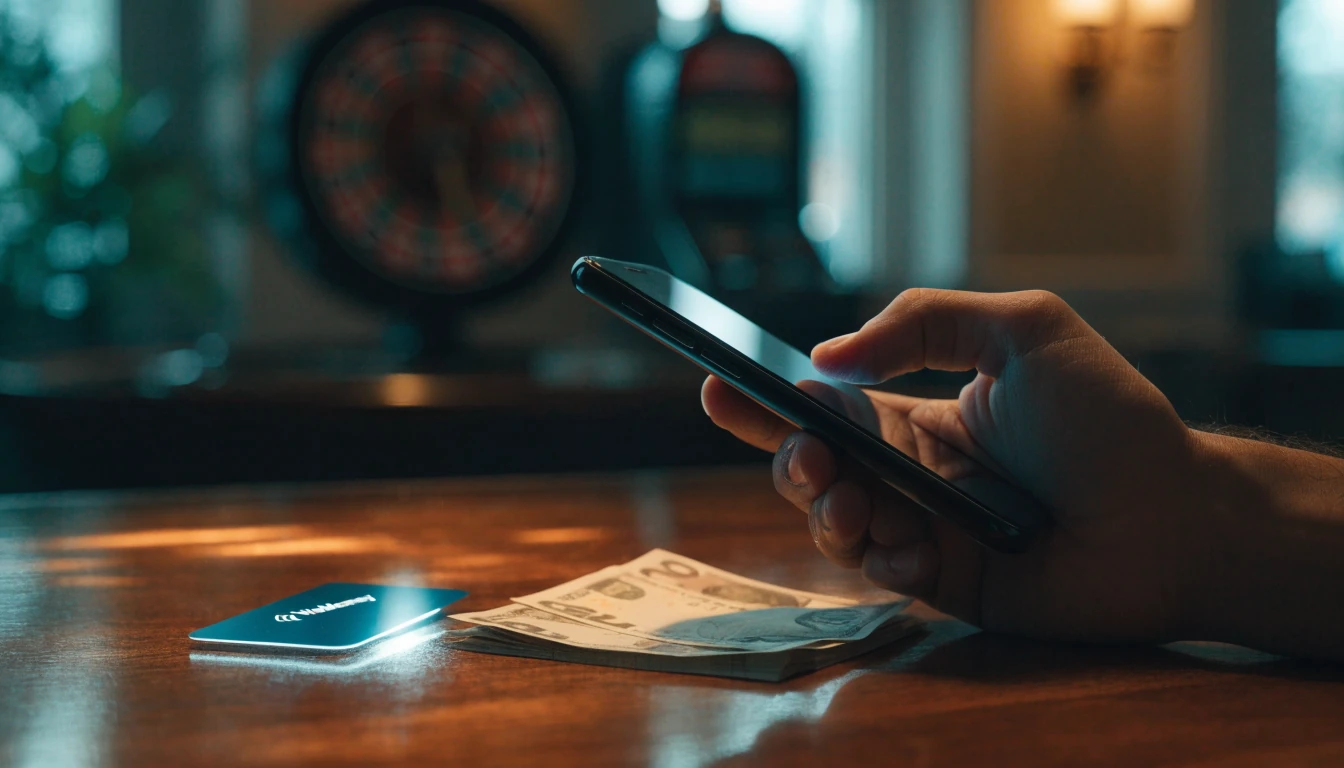
There is a small piece of financial housekeeping before any deposit: the alternative withdrawal method should be registered with the casino. Otherwise, a balance may be playable but lack a ready route out. The exact options belong to each operator, so the relevant account information matters more than the presence of Boku at the deposit stage.
The payment method also says nothing by itself about whether a casino is properly authorised. Before depositing, the casino’s licence should be checked on the UK Gambling Commission’s public register. That check concerns the operator, not the phone-payment brand. A mobile bill is not a regulatory credential.
Speed is another point that cannot be inferred from Boku. Since Boku does not process withdrawals, it cannot make a casino payout instant or establish how long another method will take. Withdrawal timing depends on the route and the operator’s handling of the request; the initial phone payment offers no shortcut.

Money goes in by one door. It must leave by another.
Boku Does Not Establish a Casino’s Gamstop Status
A casino’s use of Boku says something about its payment arrangements, not whether it is connected to Gamstop. The two serve different purposes: Boku processes a deposit through a mobile account, while Gamstop concerns self-exclusion. A Boku logo in a cashier cannot establish whether a site is covered by Gamstop, whether an account is registered with the scheme, or what protections apply to a particular player.
The same distinction works in reverse. A casino that does not offer Boku is not thereby more closely connected to Gamstop, and a site accepting Boku is not automatically outside the UK regulatory system. Payment options are a poor substitute for checking a casino’s status.
For customers in Great Britain, the relevant regulatory test is whether the operator holds a current UK Gambling Commission licence. That licence should be checked on the Commission’s public register before any money is deposited. A payment method cannot stand in for that check; nor can it establish that a casino is suitable for someone who has chosen to self-exclude.

Boku itself was not specifically prohibited by a UK Gambling Commission rule. Some operators chose to remove it because of compliance concerns. That was a commercial and risk decision by individual casinos, not a regulator’s declaration that Boku casinos were outside Gamstop or outside UK oversight. The distinction is unglamorous, but important.
Searches for Boku casinos “not on Gamstop” can therefore join two unrelated facts into one misleading inference. Direct Boku acceptance does not prove that a casino is unregistered with Gamstop, and it does not prove that a casino is unlicensed. A site’s claims about either point need to be assessed on their own terms. Where self-exclusion is relevant, the payment method offers no reliable clue; where legality is relevant, the UKGC register is the check that matters.
What are the deposit limits at pay-by-mobile casinos?
Limits vary by payment route: Boku is usually capped at £30 per transaction, though some casinos or networks allow £40 or £50. Network-level limits are typically about £10 per transaction and £30 per day, and PAYG deposits cannot exceed your remaining phone credit.
What is the standard Boku deposit limit in the UK?
The standard limit is £30 per transaction, although some casinos or mobile networks may allow up to £40 or £50.
How do I deposit with Boku at an online casino?
Choose Boku in the casino cashier, enter your deposit amount and phone number, then confirm the payment with the SMS verification code. Deposits are available in amounts divisible by ten, such as £10, £20 or £30.
Can I deposit by phone bill without Boku?
Yes. Some casinos use other mobile-payment services, including Fonix or Siru Mobile, instead of Boku.
Are there any Boku casinos left in the UK?
Yes. A small number remain, including Jackpot Mobile Casino and Peachy Games, although operators have increasingly replaced Boku or removed mobile payments.
Are Boku deposits eligible for casino bonuses?
Bonus eligibility varies by casino and offer, so check the promotion’s terms before depositing. Pay-by-phone deposits are confirmed as eligible for bonus offers at MrQ, Duelz, Mr Vegas and Videoslots, but those sites use other mobile-payment services.
Created by the ”Nine Casino 2” editorial team.